




What's Happening?
Vivint, a U.S. smart home, security, and energy company, has released its second annual 'How We Home Report,' detailing evolving homeowner expectations for smart home technology. The report, based on a September 2026 survey of 5,000 U.S. homeowners, indicates
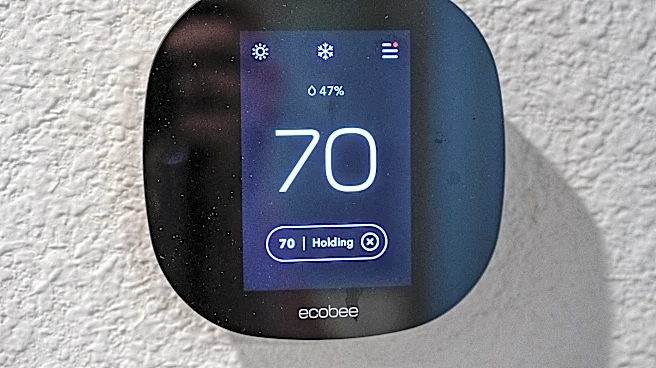
that security remains a top priority, with 78% of homeowners owning at least one smart device and 61% purchasing a new one in the past year. Concerns about crime, economic conditions, and severe weather contribute to 1 in 5 homeowners feeling less safe. Energy management is also a significant focus, as 59% report increased energy bills and 37% use smart technology to track consumption. A notable shift is the rising demand for professional installation, with 34% citing correct device installation as a primary reason for choosing professional services over DIY, due to challenges with setup and integration of multiple devices.
Why It's Important?
This report highlights significant trends impacting the U.S. smart home industry and consumer behavior. The emphasis on security reflects broader societal concerns about safety and property protection, driving demand for integrated security solutions. The focus on energy management underscores the economic pressures faced by homeowners due to rising utility costs, positioning smart home systems as tools for financial savings and sustainability. The growing preference for professional installation signals a maturation of the smart home market, where consumers seek reliability and seamless integration over initial cost savings from DIY options. This shift could lead to increased business for professional installation services and companies offering comprehensive, integrated smart home platforms, while potentially challenging manufacturers of standalone, DIY-focused devices.
What's Next?
The findings suggest that smart home companies will likely continue to innovate in integrated security and energy management solutions, focusing on user-friendly platforms that combine multiple functionalities. There may be an increased emphasis on professional installation services as a key differentiator, with companies investing in training and expanding their installation networks. Manufacturers of smart home devices might also need to adapt by ensuring their products are easily integrable into broader systems and by offering clearer guidance for professional installers. Consumers can expect more sophisticated, interconnected smart home ecosystems that address both security anxieties and financial concerns related to energy consumption, moving away from fragmented device management towards unified control.
Beyond the Headlines
The report subtly points to a broader societal trend of increasing reliance on technology for fundamental needs like safety and financial stability. The willingness of nearly 3 in 4 homeowners to trust smart devices with their privacy, despite ongoing public debates, indicates a growing acceptance of technology's role in personal security. This trust, however, places a significant responsibility on smart home providers to maintain robust data privacy and cybersecurity measures. Furthermore, the report touches on the use of smart home technology for family and home care, including elder care and remote monitoring for travelers, suggesting an evolving role for these systems beyond basic security and convenience, moving towards comprehensive life management and support.