






What's Happening?
Silka Luisa, the showrunner and creator of Prime Video's upcoming series 'Blade Runner 2099,' has shared insights into the production and thematic elements of the show. Set 50 years after 'Blade Runner 2049,' the series depicts a Los Angeles rebuilding
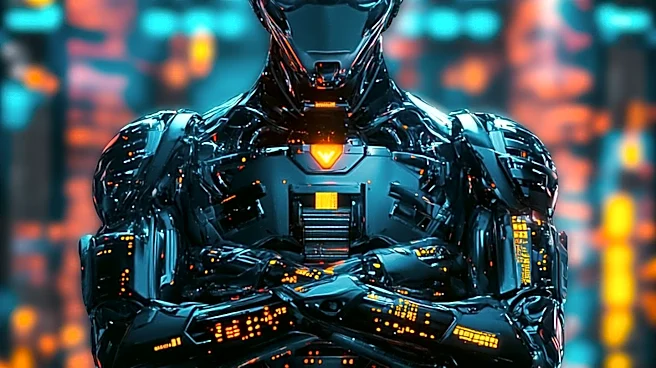
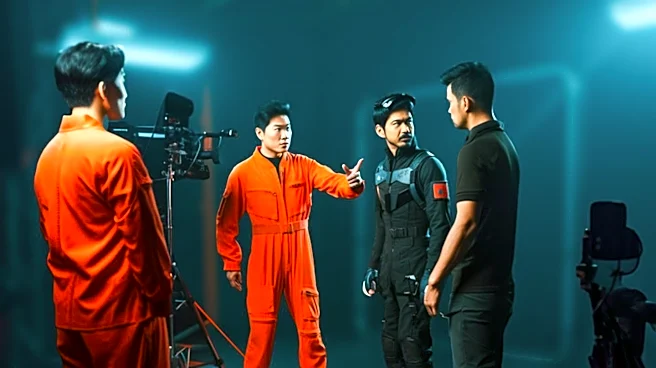
after a war, with replicants in control and humanity struggling to adapt. The show stars Hunter Schafer as Cora, a human who assumes the identity of a Blade Runner, and Michelle Yeoh as Olwen, a replicant. Luisa discussed the challenges of meeting the high visual expectations set by previous 'Blade Runner' films, noting that filming in Prague offered unexpected advantages. The production utilized practical design, sourcing old technology from flea markets in Hungary and Romania, and leveraging Prague's existing architecture to create the futuristic setting. Luisa also revealed her intention to introduce a 'sunshine noir' aesthetic, presenting a hotter and more oppressive atmosphere than previously seen in the franchise. Her personal interest in the future of humanity, particularly as a parent, influenced her approach to the series' themes.
Why It's Important?
The development of 'Blade Runner 2099' is significant for the entertainment industry, particularly for fans of the iconic science fiction franchise. The series aims to expand the 'Blade Runner' universe, which has a strong cultural impact and a dedicated following. Luisa's decision to center the narrative on two women, Cora and Olwen, marks a notable shift from the male-dominated protagonists of previous installments, potentially broadening the appeal and thematic scope of the franchise. Her emphasis on empathy as a core theme, echoing Philip K. Dick's original novel, suggests a continuation of the philosophical depth that has defined 'Blade Runner.' The production's reliance on practical design and existing architecture in Prague highlights a trend in filmmaking to blend traditional techniques with modern storytelling, which could influence future large-scale productions. The series' premiere on Prime Video underscores the growing importance of streaming platforms in delivering high-profile, serialized content.
What's Next?
'Blade Runner 2099' is scheduled to premiere on Prime Video on November 25. Following its release, critical and audience reception will determine its immediate impact and potential for future seasons. The series' success could influence Prime Video's strategy for developing other high-concept science fiction properties. The discussions surrounding the show's unique visual style, particularly the 'sunshine noir' concept, and its thematic focus on empathy and the evolving relationship between humans and replicants, are expected to continue among fans and critics. The show's ambiguous ending, as hinted by Luisa, is likely to spark further debate and interpretation, consistent with the franchise's tradition of open-ended narratives. The series will also be a test of how well a television format can maintain the intricate world-building and philosophical depth established by the original films.
Beyond the Headlines
The creation of 'Blade Runner 2099' delves into deeper implications regarding the evolution of classic science fiction franchises in the streaming era. Luisa's personal motivation, driven by anxieties about the future for her children, reflects a broader societal concern about humanity's trajectory and the role of technology. The series' exploration of replicant agency and power, following the events of 'Blade Runner 2049,' raises ethical questions about artificial intelligence and sentient beings. The choice to film in Prague and utilize practical effects, rather than relying solely on CGI, speaks to a potential shift in production values, emphasizing tangible environments and a more grounded aesthetic. This approach could influence how future sci-fi productions balance visual spectacle with practical realism. The show's continuation of the 'Blade Runner' legacy also highlights the enduring appeal of stories that question the nature of humanity and consciousness, resonating with contemporary discussions about AI and its societal impact.