





What's Happening?
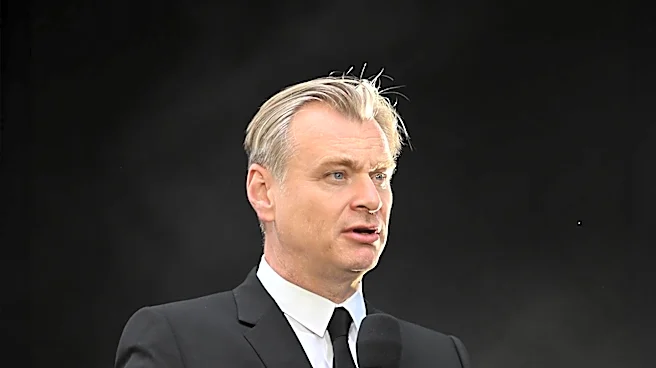
Renowned filmmaker Christopher Nolan has expressed admiration for the 1982 documentary 'Koyaanisqatsi,' describing it as 'one of the great pieces of pure cinema.' The film, directed by Godfrey Reggio, is known for its avant-garde style, featuring a montage
of images depicting the contrast between nature and industrialization, set to a score by Philip Glass. Nolan's comments came during a visit to the Criterion Closet, where he selected several films, including 'Koyaanisqatsi,' highlighting its influence on his cinematic perspective. The documentary is part of a trilogy exploring themes of environmental and societal change.
Why It's Important?
Nolan's endorsement of 'Koyaanisqatsi' underscores the film's enduring impact on the cinematic landscape. As a proponent of 'pure cinema,' the documentary challenges traditional narrative structures, focusing on visual storytelling and thematic exploration. Its influence is evident in the works of filmmakers who prioritize visual and auditory experiences over conventional plot-driven narratives. Nolan's recognition of the film highlights its significance in shaping modern cinematic techniques and its role in inspiring filmmakers to explore innovative storytelling methods.
Beyond the Headlines
The concept of 'pure cinema,' as exemplified by 'Koyaanisqatsi,' invites audiences to engage with film as an art form that transcends traditional storytelling. This approach encourages viewers to interpret visual and auditory cues, fostering a deeper appreciation for the medium's artistic potential. The film's exploration of environmental themes also resonates with contemporary concerns about sustainability and the human impact on the planet. By revisiting such works, filmmakers and audiences alike are reminded of cinema's power to provoke thought and inspire change.