






What's Happening?
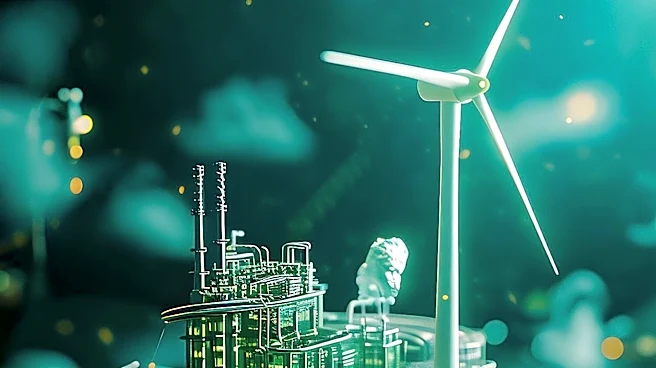
Gulf countries are making significant strides in advancing decarbonization tools, including investments in green hydrogen production, green steel, carbon capture and storage, and natural hydrogen exploration. This progress is occurring amidst multiple
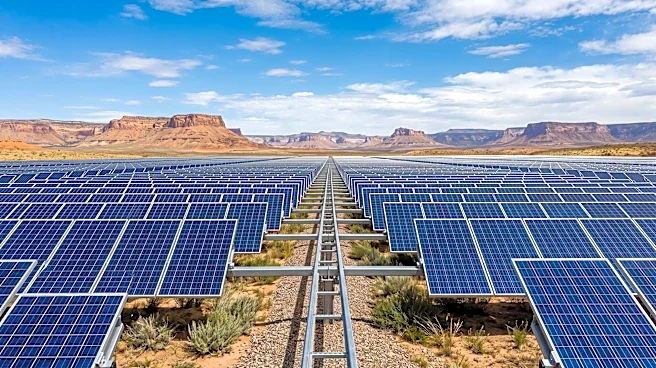
global crises, including pandemics, wars, and energy shocks, which have often overshadowed climate change concerns. Companies like Masdar and Acwa Power are expanding low-cost renewables into regions previously overlooked by Western green investors, such as Africa and Central Asia. The Gulf region has achieved world-record low prices for solar power and developed the world's first large 24-hour solar and battery plant. These efforts are aimed at boosting energy security and affordability, while also diversifying supply chains for critical minerals beyond China.
Why It's Important?
The Gulf's accelerated investment in decarbonization tools holds significant implications for the U.S. and global energy markets. By pioneering advancements in green hydrogen, carbon capture, and large-scale solar, these nations are contributing to a more diversified and resilient global energy infrastructure. This can reduce reliance on traditional fossil fuels, which has direct benefits for U.S. energy security and its strategic interests in global energy stability. The expansion of low-cost renewables into new markets by Gulf companies also creates new competitive dynamics and potential collaboration opportunities for U.S. renewable energy firms. Furthermore, the diversification of critical mineral supply chains, moving away from a heavy dependence on China, is a strategic advantage for U.S. industries and national security, ensuring more stable access to essential materials for advanced technologies.
What's Next?
The ongoing investments and advancements in decarbonization tools by Gulf nations are expected to continue, with a focus on scaling up green hydrogen production and further integrating renewable energy into their grids. This will likely lead to increased international partnerships and technological exchanges, potentially involving U.S. companies and research institutions. The success of these initiatives could influence global energy policies and investment trends, encouraging other countries to accelerate their own decarbonization efforts. As these technologies mature and become more cost-effective, they could play a crucial role in achieving global climate targets and mitigating the economic and social impacts of climate change. The diversification of critical mineral supply chains will also be a continuous effort, with potential for new mining and processing ventures globally.
Beyond the Headlines
The Gulf's proactive stance on decarbonization, despite being major oil and gas producers, represents a profound shift in global energy strategy. This move is not merely about environmental responsibility but also about long-term economic resilience and geopolitical influence. By becoming leaders in green energy technologies, these nations are positioning themselves to maintain relevance and power in a post-fossil fuel world. This raises ethical questions about the equitable distribution of green energy benefits and the potential for new forms of energy dependency. Legally, the development of new energy infrastructure and supply chains will necessitate complex international agreements and regulatory frameworks. Culturally, it challenges the traditional perception of these regions solely as hydrocarbon suppliers, fostering a new identity as innovators in sustainable energy.