


What's Happening?
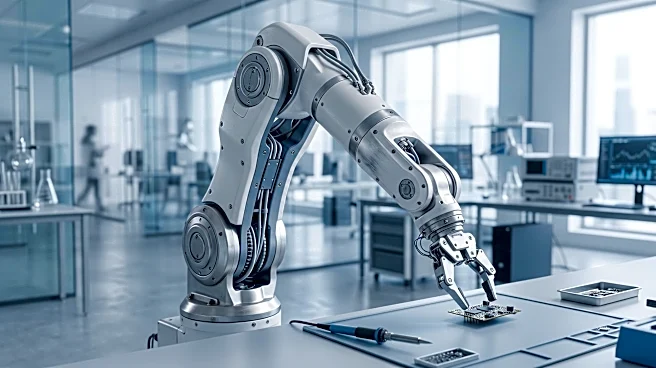
OpenAI has restructured its robotics division, reassigning researchers to its main research team under Chief Research Officer Mark Chen and integrating applied robotics and hardware teams into Greg Brockman's Applied organization. This move comes as OpenAI believes
that advanced general-purpose models, such as GPT-6 Astra, can directly control robots, potentially reducing the need for specialized robotics AI. The company had previously disbanded its robotics division in 2020 due to a lack of training data, only to rebuild it in 2024 with CEO Sam Altman reportedly aiming for a public robot demonstration by 2027. Despite the reorganization, OpenAI maintains its long-term goal of building everyday robots. The decision was made on short notice, leading to an empty booth at the Conference on Robot Learning (CoRL) in Austin, which OpenAI had booked. This strategic shift highlights OpenAI's focus on leveraging its core AI advancements for robotics applications, with GPT-6 Astra showing promising results in simulated and real-world robotics tasks, outperforming specialized models in some benchmarks.
Why It's Important?
This reorganization signifies a pivotal shift in OpenAI's approach to robotics, emphasizing the growing capabilities of general-purpose AI models. If general-purpose models can effectively control robots, it could streamline development, reduce costs, and accelerate the integration of AI into physical systems across various industries. This could lead to significant advancements in automation, manufacturing, logistics, and even domestic applications. For the U.S. technology sector, this move could solidify OpenAI's leadership in AI innovation, potentially attracting more talent and investment. However, it also raises questions about the future of specialized robotics AI companies and research, which might face increased competition or pressure to adapt. The success of this strategy could also influence national discussions on AI policy, particularly regarding the development and deployment of autonomous systems, and the balance between general AI capabilities and specialized applications. The financial pressures on OpenAI to focus on its core AI business, as noted in the source, underscore the high stakes involved in this strategic pivot.
What's Next?
OpenAI is expected to continue integrating its general-purpose AI models into robotics applications, with a public robot demonstration reportedly targeted for 2027. Further research and development will likely focus on enhancing the capabilities of models like GPT-6 Astra in controlling physical robots and addressing challenges related to cost, reliability, speed, and energy consumption. The company's performance in these areas will be closely watched by competitors like Anthropic and Google, who are also making progress in robotics tasks with their large general-purpose models. The broader AI and robotics communities will be evaluating whether general-purpose AI can indeed supersede specialized robotics AI or if a hybrid approach will ultimately prevail. This development could also prompt discussions among policymakers and industry leaders about the regulatory frameworks needed for increasingly autonomous AI-driven robotic systems, particularly concerning safety and ethical implications.
Beyond the Headlines
The shift towards general-purpose AI controlling robots has profound implications beyond immediate technological advancements. Ethically, it raises questions about the autonomy and decision-making processes of robots powered by highly capable AI, especially in complex or unpredictable environments. The potential for these systems to operate with less human oversight could lead to new debates on accountability and control. Legally, existing frameworks for robotics and AI may need significant updates to address the unique challenges posed by general-purpose AI in physical applications. Culturally, the widespread adoption of such robots could alter human-robot interaction, labor markets, and societal perceptions of intelligent machines. The long-term vision of OpenAI to build 'everyday robots' suggests a future where AI-driven machines are ubiquitous, necessitating a deeper societal conversation about their role and impact on daily life and human agency.