


What's Happening?
Cushman & Wakefield, a global commercial real estate services firm, has released a report titled 'From Megawatts to Multipliers: The Data Center Effect on Industrial Demand, Jobs and Local Revenue,' highlighting the significant impact of the artificial
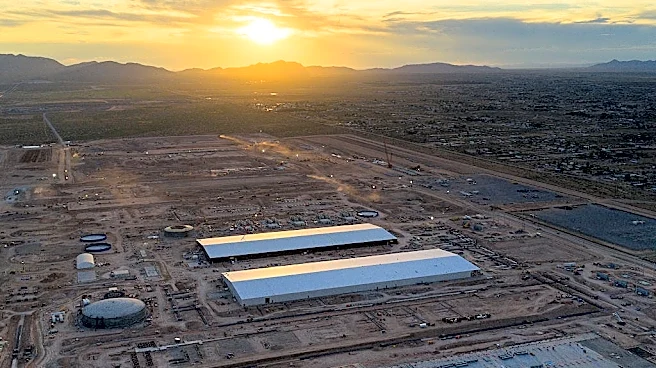
intelligence (AI) boom on industrial real estate and broader economic activity in the U.S. The report analyzed over 388 million square feet of industrial leasing across six major data center markets—Atlanta, Austin/San Antonio, Chicago, Dallas, Phoenix, and Virginia—between 2022 and 2025. It found that businesses associated with the data center ecosystem accounted for 10.4% of all new industrial leasing activity during this period. This share increased to a record 14.4% in 2025, with data center-related leasing growing by 44% year-over-year to 13.5 million square feet. The study indicates that every 100 megawatts of new data center development is linked to approximately 365,000 square feet of industrial leasing, 1,285 initial and downstream jobs, $110 million in annual wages, $344 million in gross economic output, and about $15 million in annual fiscal benefits. This demonstrates a substantial multiplier effect beyond the data centers themselves, impacting manufacturing, contracting, and various service providers.
Why It's Important?
The findings from Cushman & Wakefield underscore a critical economic shift driven by the rapid expansion of AI infrastructure. The report illustrates how the demand for data centers, fueled by AI, is not only transforming the industrial real estate sector but also generating significant job creation and economic output across various U.S. regions. This trend is particularly important for local economies, as it brings substantial annual wages and fiscal benefits. The increased leasing activity in industrial spaces, such as warehouses and distribution centers, indicates a robust demand for the supporting ecosystem required by data centers. This creates opportunities for developers, occupiers, and communities in these markets. The report also highlights the resilience of the industrial real estate market, even as other commercial real estate sectors face challenges. The sustained growth in data center-related industrial leasing suggests a long-term economic driver, influencing investment decisions and urban planning in affected areas.
What's Next?
The continued expansion of AI is expected to further intensify demand for industrial real estate and related infrastructure. Cushman & Wakefield's report suggests that the multiplier effects observed will become increasingly significant for developers, occupiers, and the communities where these investments are taking place. As more data centers come online, there will be a sustained need for manufacturers, contractors, suppliers, and service providers, all of whom require industrial space. This trend is likely to lead to further job growth and economic contributions in the identified markets and potentially in new regions as AI infrastructure expands. Stakeholders, including local governments and real estate investors, will likely focus on understanding and capitalizing on these economic ripple effects. The report implies that strategic planning for industrial development and workforce training will be crucial to support this ongoing growth and maximize the benefits for local economies.
Beyond the Headlines
The AI boom's impact on industrial real estate extends beyond mere square footage and job numbers; it signifies a fundamental restructuring of economic landscapes. The shift towards a data-driven economy, powered by AI, is creating new categories of demand and reshaping traditional industrial zones. This development raises questions about sustainable growth, resource allocation, and the long-term environmental footprint of extensive data center operations. The concentration of these facilities in specific regions could lead to localized economic booms, but also potential challenges related to energy consumption, land use, and infrastructure strain. Furthermore, the report implicitly points to the increasing interconnectedness of technology and physical infrastructure, where advancements in AI directly translate into tangible real estate needs. This trend could influence future urban development strategies, emphasizing the integration of tech-driven industrial ecosystems within broader economic planning.