








What's Happening?
CellGS has introduced plant-derived TGF-β3, marking a significant advancement in the production of recombinant growth factors. Historically, these factors were produced using bacteria, yeast, or mammalian cells. Plant molecular farming, which involves
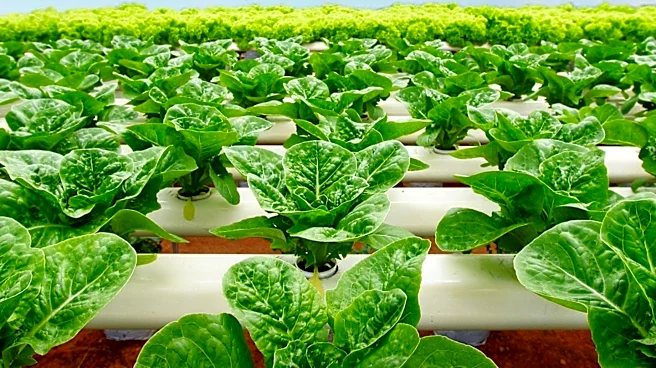
producing recombinant proteins in engineered plants or plant cell cultures, has matured over the past two decades and is now supplying commercial growth factors and cytokines to stem cell researchers, cell therapy developers, and the cultivated meat sector. This method offers several advantages, including the absence of animal or microbial contaminants, as plants do not carry mammalian viruses, prions, or oncogenes, and do not produce bacterial endotoxins. This eliminates a major concern for products used in cell therapy or regenerative medicine. Furthermore, plant-based production allows for agricultural scale-up, where increasing output simply means planting more, at a fraction of the capital cost of traditional fermentation suites. Plant cells also possess eukaryotic folding machinery, enabling them to form disulfide bonds and perform post-translational modifications crucial for complex growth factors, unlike E. coli.
Why It's Important?
The shift to plant-derived growth factors is crucial for several U.S. industries. For the cultivated meat sector, growth factors are a dominant cost in serum-free media, accounting for a significant portion of variable operating costs. Plant-based production can drastically reduce these costs, making cultivated meat more economically viable and accessible. For instance, replacing commercial growth factors with plant-made equivalents could reduce medium costs from $376 to $21.70 per liter. In the biomedical field, particularly for cell therapy and regenerative medicine, the animal-free nature of these growth factors eliminates concerns about mammalian viruses, prions, and endotoxins, simplifying regulatory approval and enhancing product safety. Companies like Core Biogenesis and Tiamat Sciences are targeting these markets, with Core Biogenesis already distributing products to European research customers at significantly lower prices. This innovation also supports the development of new applications in cosmetics, with oleosome-fused EGF and FGF-2 being positioned as retinol alternatives, expanding the market for plant-derived proteins.
What's Next?
The plant molecular farming market is projected to grow substantially, with forecasts estimating it to reach $1.34 billion by 2032. This growth will likely be driven by continued advancements in plant expression systems and increasing demand from the cultivated meat and regenerative medicine sectors. Companies in this space will focus on improving yields, ensuring consistent product quality, and addressing scale-up challenges. The development of glycoengineered plant lines that can produce human-like glycans will further broaden the applicability of plant-made therapeutics. Additionally, the industry will need to establish more comprehensive comparative data on the bioactivity and equivalence of plant-made growth factors against conventionally produced counterparts across various cell types. As the technology matures, more distribution partnerships, similar to ORF Genetics' agreement with Tebubio, are expected, moving plant-derived growth factors from novelties to standard catalogue items in research and industrial applications.
Beyond the Headlines
The adoption of plant-derived growth factors represents a broader shift towards sustainable and ethical production methods across multiple industries. Beyond the immediate economic and safety benefits, this technology addresses ethical concerns related to animal welfare by eliminating the need for animal-derived components in critical biological products. It also contributes to environmental sustainability by offering a more resource-efficient production method compared to traditional bioreactor-based systems, with a smaller carbon footprint. The ability to scale production through agriculture rather than complex industrial facilities could democratize access to these vital components, particularly in regions with limited access to advanced biomanufacturing infrastructure. This innovation also highlights the potential of molecular farming to transform various sectors, from medicine to food, by leveraging plant biology for the production of high-value proteins and compounds, fostering a more resilient and diversified supply chain.