



What's Happening?
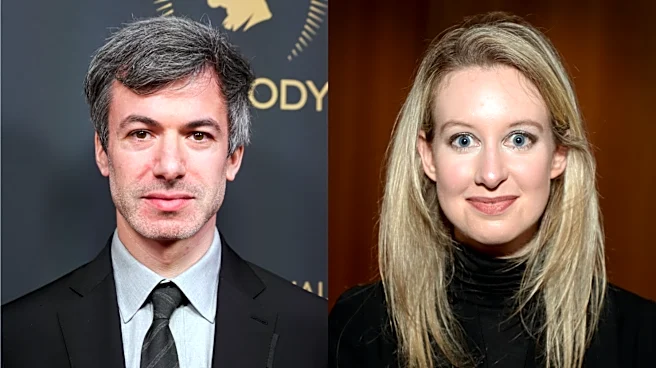
Nathan Fielder, known for his comedic works 'Nathan For You' and 'The Curse,' has secretly directed a documentary titled 'You Can See Everything' about Theranos founder Elizabeth Holmes. The film premiered unexpectedly at the Telluride Film Festival,
where the audience was unaware of the screening's subject matter until it began. The 174-minute documentary provides unprecedented access to Holmes and her husband, Billy, in the days leading up to her imprisonment for fraud. Holmes, who founded Theranos in 2003, promised to revolutionize blood testing technology, but a 2015 investigation by The Wall Street Journal revealed her machines were not functional as advertised, leading to her conviction and an 11-year prison sentence. Fielder reportedly moved into Holmes' home to film, capturing her perspective just before she went to jail. The teaser trailer released by A24 features Holmes stating, 'I'm not that person, I can promise you that,' with an 'eerie smile,' setting a tone of discomfort and ambiguity.
Why It's Important?
This documentary is significant as it offers a rare, intimate look into the life of Elizabeth Holmes, a figure who became a symbol of Silicon Valley's unchecked ambition and the consequences of corporate fraud. The film's secret production and Fielder's immersive approach, including living in Holmes' home, suggest a unique and potentially unfiltered perspective on her character and the events leading to her downfall. This contrasts with previous portrayals, such as 'The Dropout' podcast and miniseries, which largely focused on the public narrative of her deception. By providing access to Holmes just before her incarceration, the documentary could offer new insights into her mindset, her perception of her actions, and her personal life during a critical period. This could influence public understanding of the Theranos scandal, the psychology of white-collar crime, and the broader culture of tech startups. The film's release by A24 in the U.S. this October indicates a wide distribution, ensuring a significant impact on public discourse.
What's Next?
A24 is scheduled to release 'You Can See Everything' in the U.S. this October, following its surprise premiere at the Telluride Film Festival. The film's release will likely reignite public discussion about Elizabeth Holmes, Theranos, and the ethical responsibilities of tech entrepreneurs. Given the controversial nature of Holmes' story and Fielder's unique directorial style, the documentary is expected to generate considerable media attention, critical reviews, and public debate. Viewers will have the opportunity to form their own interpretations of Holmes' character and the events, potentially leading to a re-evaluation of her public image. The film's impact could extend to legal and business circles, prompting further scrutiny of startup culture and investor due diligence. While no U.K. release plans have been announced, the film's U.S. reception will likely influence its international distribution, potentially bringing this intimate portrayal of a notorious figure to a global audience.
Beyond the Headlines
Nathan Fielder's documentary on Elizabeth Holmes delves into deeper psychological and societal implications beyond the immediate narrative of fraud. The film's 'eerie' tone and Fielder's admitted struggle to comprehend his experience with Holmes suggest an exploration of the complexities of human perception, self-deception, and the construction of public identity. It raises questions about how individuals, even those convicted of serious crimes, rationalize their actions and maintain a sense of self. The unprecedented access granted to Fielder could reveal the human cost of such high-stakes corporate failures, not just for the victims but also for the perpetrators. Furthermore, the documentary's existence itself, produced in secret and offering a platform to a controversial figure, sparks ethical debates about journalistic access, the portrayal of criminals, and the potential for media to shape or reshape public opinion. It could serve as a case study in the evolving landscape of documentary filmmaking, where the lines between observation, participation, and influence become increasingly blurred.