
What's Happening?
Elon Musk's role as a founder in companies like Tesla and PayPal has been subject to clarification, as he did not initially create these entities. In the case of PayPal, Musk founded X.com in 1999, which
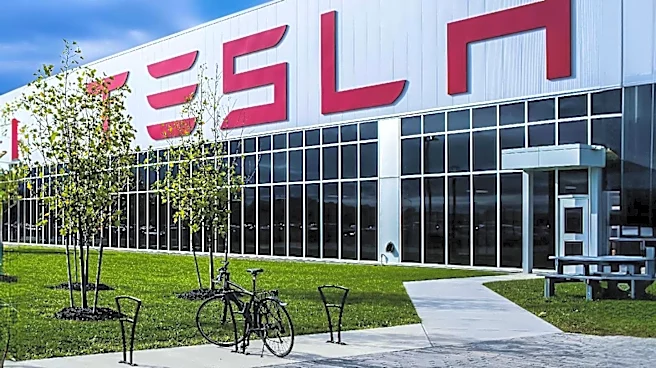
merged with Confinity in 2000. Confinity, co-founded by Peter Thiel and Max Levchin, already had the PayPal product. Following the merger, the combined entity adopted the PayPal name, leading to Musk being recognized as a founder despite the product predating his involvement. Similarly, Tesla was initially registered in July 2003 by engineers Martin Eberhard and Marc Tarpenning. Musk joined seven months later during the first investment round, assuming the board presidency. After a dispute and subsequent out-of-court settlement in 2009, Musk, along with J.B. Straubel and Ian Wright, were officially recognized as founders.
Why It's Important?
The clarification of Elon Musk's founder status in prominent U.S. companies like Tesla and PayPal is significant for understanding the dynamics of entrepreneurship and corporate history. It highlights how mergers, acquisitions, and investment rounds can reshape the narrative of a company's origins and the recognition of its key figures. This situation underscores the complexities of attributing founding roles, especially in rapidly evolving tech industries where early contributions and subsequent investments can both be pivotal. For the U.S. business landscape, this discussion impacts how entrepreneurial success is perceived and documented, influencing future investment patterns and the public's understanding of innovation. It also raises questions about the legal and historical definitions of 'founder' in the context of corporate development and intellectual property, affecting how credit is assigned and how company legacies are established.
What's Next?
The ongoing discussions surrounding Elon Musk's founder status are likely to continue shaping public perception and historical accounts of major U.S. tech companies. This scrutiny could lead to a more nuanced understanding of corporate origins, emphasizing the collective efforts of multiple individuals rather than solely focusing on a single figure. For future entrepreneurs and investors, these historical clarifications might influence how founding teams are structured, how early contributions are documented, and how equity and recognition are distributed. It could also prompt greater transparency in corporate narratives, ensuring that the contributions of all key players are accurately acknowledged. This evolving understanding of founder roles may also impact legal frameworks related to intellectual property and company ownership, potentially leading to clearer guidelines for attributing credit in complex business formations.
Beyond the Headlines
The debate over Elon Musk's founder status delves into deeper implications concerning the narrative of innovation and the cult of personality in the U.S. tech industry. It challenges the often-simplified stories of singular visionaries, revealing the intricate, collaborative, and sometimes contentious processes behind the creation of successful enterprises. This re-evaluation encourages a more critical examination of corporate histories, highlighting the contributions of engineers, early investors, and strategic partners who might otherwise be overshadowed. Ethically, it prompts a discussion about fairness in attributing credit and the potential for powerful individuals to reshape historical accounts. Culturally, it reflects a broader societal interest in authenticity and transparency, pushing back against narratives that might oversimplify complex entrepreneurial journeys. This ongoing discourse could lead to a more inclusive and accurate understanding of how groundbreaking companies are truly built.