







What's Happening?
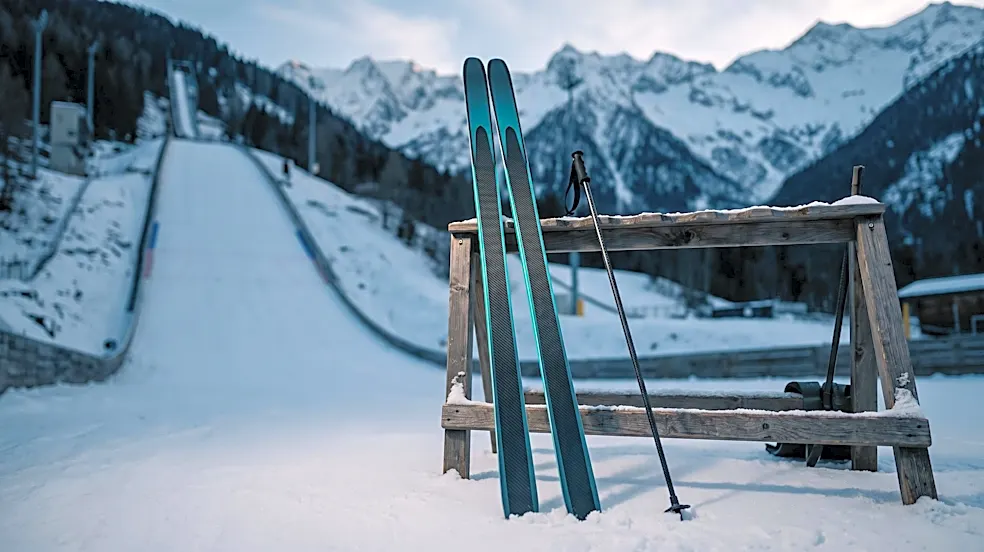
Nordic combined, a sport that integrates ski jumping and cross-country skiing, faces exclusion from the 2030 Winter Olympics in the French Alps, a decision made by the International Olympic Committee. The sport has been a part of every Winter Olympics since
its inception in 1924, but women have never had the opportunity to compete at the Olympic level. German ski federation sporting director Horst Hüttel revealed that Olympic champion Jason Lamy Chappuis and former biathlon great Martin Fourcade plan to meet with French President Emmanuel Macron in November to advocate for the sport's inclusion. Hüttel emphasized that a signal from the host nation could provide a crucial 'another chance' for Nordic combined. A final decision on its potential return for the 2034 Games is anticipated in the fourth quarter of 2027. Former overall women's World Cup champion Nathalie Armbruster expressed feelings of helplessness and fatigue from the ongoing fight, despite believing in the sport's strong arguments for inclusion. Discussions are also underway regarding adjustments to the competition structure, such as a more compact schedule where the cross-country portion could follow the ski jumping within 15 minutes, to potentially save the sport's Olympic future.
Why It's Important?
The potential exclusion of Nordic combined from the 2030 Winter Olympics carries significant implications for the sport's future and its athletes. For a discipline with a century-long Olympic history, its removal would represent a major blow, potentially leading to a decline in funding, participation, and public interest. Athletes, who dedicate their lives to training, face an uncertain future, as highlighted by Nathalie Armbruster's sentiment of helplessness. The absence of Olympic status could diminish career prospects and the motivation for new generations to enter the sport. Furthermore, the fact that women have never competed in Nordic combined at the Olympics underscores a broader issue of gender equity within winter sports, making its potential removal even more contentious. The reliance on political intervention, specifically from French President Emmanuel Macron, highlights the complex interplay between sports governance, national interests, and the Olympic movement's evolving priorities. A successful lobbying effort could set a precedent for how traditional sports navigate modern Olympic program changes, while failure could signal a shift towards more commercially viable or widely practiced disciplines.
What's Next?
The immediate next step involves the planned meeting in November between French President Emmanuel Macron and Olympic champion Jason Lamy Chappuis, alongside Martin Fourcade, to lobby for Nordic combined's reinstatement. The outcome of this meeting will be crucial in determining whether the sport receives a 'signal from the host nation' that could influence the International Olympic Committee's (IOC) future decisions. Concurrently, discussions will continue regarding potential adjustments to the competition structure, such as a more compact schedule, which German ski federation sporting director Horst Hüttel and Germany coach Eric Frenzel view as a possible rescue measure. These new formats may be introduced in the World Cup without prior testing, indicating a willingness from athletes and federations to adapt to save the sport. The ultimate decision on Nordic combined's potential return for the 2034 Winter Olympics is scheduled for the fourth quarter of 2027. If the sport faces another rejection at that time, Hüttel warned that there would be 'no further options for elite sport,' suggesting a definitive end to its Olympic aspirations.
Beyond the Headlines
The struggle of Nordic combined to maintain its Olympic status reflects broader trends and challenges within the modern Olympic movement. The International Olympic Committee (IOC) has increasingly prioritized sports with wider global appeal, gender balance, and lower operational costs, often at the expense of traditional, niche disciplines. This situation raises questions about the balance between preserving Olympic heritage and adapting to contemporary demands for viewership and commercial viability. The fact that women have never competed in Nordic combined at the Olympics is a significant ethical and equity concern, highlighting historical disparities that the IOC is now actively trying to address across all sports. The reliance on political figures like President Macron for intervention underscores the growing influence of host nations in shaping the Olympic program, potentially shifting power dynamics away from purely sports-governing bodies. This scenario could lead to a future where Olympic inclusion is not solely based on athletic merit or historical significance, but also on geopolitical considerations and the lobbying power of national leaders, prompting a reevaluation of the criteria for Olympic sports selection.