
What's Happening?
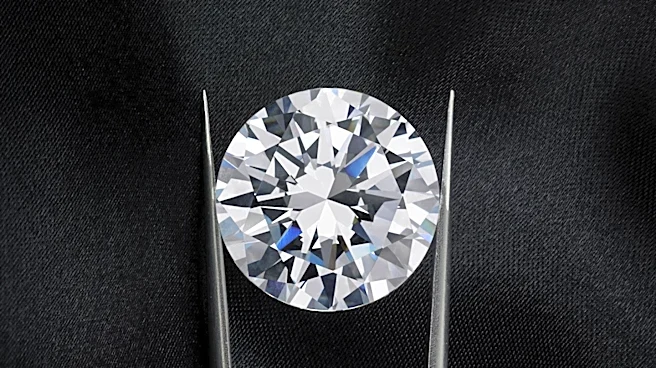
Cremation diamonds, also known as memorial diamonds, are lab-grown diamonds created using carbon extracted from cremated remains or hair. Companies like Eterneva in Austin, TX, and Algordanza in Switzerland,
offer this service, producing diamonds that meet the ISO 18323 definition of a 'laboratory-grown diamond.' The process involves collecting a measured amount of ashes or hair, isolating and purifying the carbon, and then placing it in a high-pressure, high-temperature (HPHT) press to form a diamond. The rough stone is then cut and graded. Prices for these diamonds vary significantly based on carat weight, color, and cut, with starting prices around $3,000 to $4,000 for a small stone, and larger stones potentially costing tens of thousands of dollars. The creation process typically takes several months, with Eterneva quoting an average of 7 to 10 months.
Why It's Important?
The emergence and growing popularity of cremation diamonds represent a significant development in the memorial and funeral industry, offering a highly personalized and enduring way for individuals to remember their loved ones. This option caters to a desire for a tangible and intimate connection to the deceased, moving beyond traditional urns or scattering ashes. For the funeral industry, it introduces a new high-value service, potentially expanding revenue streams and requiring specialized expertise in handling remains and collaborating with diamond-growing laboratories. Consumers, however, face a substantial financial commitment, as these diamonds can cost more than the cremation itself. The market for memorial products is evolving, with companies like Eterneva and Algordanza establishing themselves as leaders in this niche, highlighting a shift towards more bespoke and emotionally resonant memorialization practices.
What's Next?
As the cremation diamond market matures, consumers can expect increased competition and potentially more diverse offerings from companies. It is crucial for families considering this option to thoroughly research providers, asking specific questions about the origin of the carbon, tracking procedures for ashes, and policies regarding unused remains or potential flaws in the diamond. Companies may also continue to refine their processes to reduce production times and potentially lower costs, making these memorial options more accessible. The industry will likely see further standardization in terms of ethical practices and transparency, especially concerning the sourcing and handling of human remains. Additionally, the legal and regulatory frameworks surrounding the use of human remains for such purposes may evolve to address the unique aspects of this service.
Beyond the Headlines
The concept of cremation diamonds delves into profound ethical and cultural considerations surrounding death, remembrance, and the commodification of human remains. While offering a unique form of solace, it also raises questions about the commercialization of grief and the potential for exploitation. The high cost of these diamonds could create a disparity in memorial options, making personalized remembrance a luxury. Furthermore, the practice challenges traditional views on the final disposition of human remains, pushing societal norms towards more innovative and less conventional methods. The long-term implications include how future generations will perceive and value these 'memorial' diamonds, and whether they will retain their emotional and symbolic significance over time, or if they will simply become another form of jewelry.