







What's Happening?
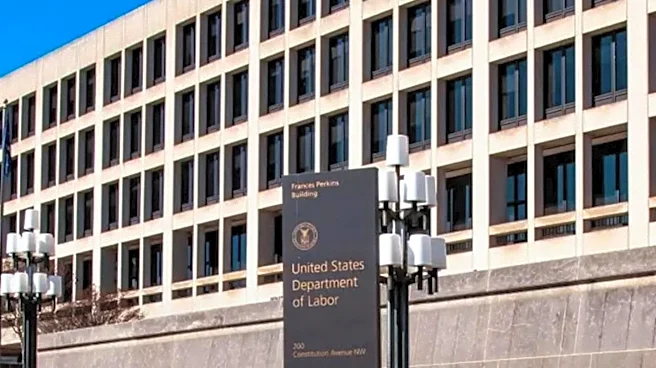
On October 19, 2026, the U.S. Department of Labor (DOL) officially withdrew three opinion letters from the 1970s and 1980s that previously guided employers on claiming tip credits for tipped employees performing non-tip-producing duties. This action further
distances the DOL from the former '80/20 Rule,' which limited the amount of time tipped employees could spend on supporting tasks without affecting the tip credit. The DOL's current stance shifts focus from a percentage-based or minute-by-minute analysis to an occupation-based approach. This means that as long as an employee is performing tasks related to their tipped occupation, even if those tasks do not directly generate tips (e.g., making coffee, rolling silverware, restocking service stations), employers can still claim a tip credit. The federal minimum wage remains $7.25 per hour, with a direct cash wage for tipped employees as low as $2.13 per hour, provided tips make up the difference to meet the minimum wage requirement. The withdrawal aims to align agency guidance with current Wage and Hour Division policy, which emphasizes the employee's occupation as a whole rather than a strict duty-by-duty tip analysis.
Why It's Important?
This change significantly impacts hospitality employers across the U.S. by providing greater flexibility in assigning customary supporting duties to tipped employees without the risk of losing tip credit eligibility. Previously, the '80/20 Rule' created administrative burdens and potential compliance issues for businesses, as they had to meticulously track the time employees spent on various tasks. The new guidance simplifies compliance by focusing on the overall nature of the employee's role within a tipped occupation. This could lead to more efficient staffing and operations within the hospitality sector, potentially reducing labor costs and administrative overhead for businesses. However, employers must still ensure that work belonging to a separate, non-tipped occupation is identified and compensated at the full applicable minimum wage. The change does not eliminate the federal Dual Jobs Rule or override stricter state or local wage laws, meaning employers must remain vigilant in adhering to all relevant regulations.
What's Next?
Hospitality employers are advised to review their current job duties, payroll, and timekeeping practices to ensure compliance with the updated DOL guidance. They should confirm that supporting tasks are indeed part of the tipped occupation and separate distinct non-tipped work, tracking and paying it at the full minimum wage. Employers also need to review tip-credit notices, tip pools, wage calculations, and payroll records. Training managers on which duties qualify for the tip credit and which do not will be crucial for smooth implementation. Additionally, businesses must check for any stricter state or local rules that may apply, as the federal change does not supersede these. The DOL's continued enforcement of the Dual Jobs Rule means employers must clearly distinguish between employees working in two separate occupations versus a tipped employee performing related duties within their tipped occupation.
Beyond the Headlines
The DOL's withdrawal of this guidance reflects a broader shift in regulatory philosophy, moving towards a more practical, occupation-based assessment rather than prescriptive time-based rules. This could set a precedent for how other labor regulations are interpreted and enforced, potentially leading to more flexible compliance frameworks in other industries. While offering relief to employers, it also underscores the ongoing tension between employer flexibility and worker protections, particularly concerning minimum wage and tip credit regulations. The emphasis on 'occupation as a whole' could be seen as a pragmatic approach to modern work environments, but it also places a greater onus on employers to accurately define job roles and ensure fair compensation, especially in states with varying minimum wage laws. The long-term impact will depend on how effectively employers adapt and how the DOL monitors compliance under this new, more flexible framework.