








What's Happening?
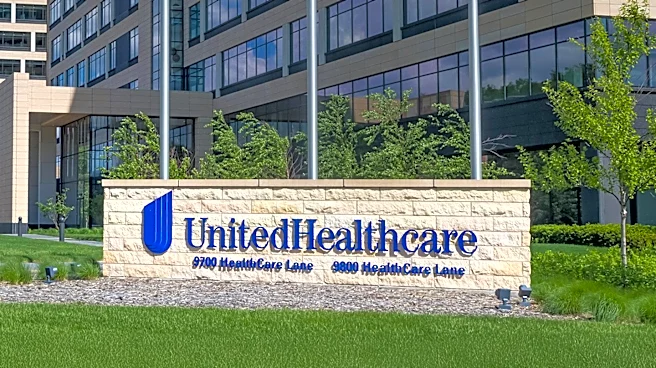
UnitedHealth Group, one of the largest health insurers globally, has reported better-than-expected earnings in recent quarters and subsequently raised its full-year guidance. This positive development follows a period in 2025 when the company faced challenges
due to rising medical costs, leading to the withdrawal of its earnings guidance and a significant drop in share value. The return of Stephen Hemsley as CEO, who previously led the company from 2006 to 2017, is credited with spearheading the turnaround. Hemsley's personal investment of $25 million in UnitedHealth stock shortly after his return signaled confidence. The company's diversified business model, which includes its Optum segment focusing on direct patient care and healthcare technology, is contributing to its recovery. UnitedHealth plans to invest nearly $1.5 billion in technology initiatives, including artificial intelligence, in 2026 to improve efficiency and streamline operations.
Why It's Important?
UnitedHealth Group's recovery and strong financial performance are significant for the U.S. healthcare and financial sectors. As a major player in health insurance and healthcare services, its stability and growth can influence market trends and investor confidence. The company's focus on controlling medical costs, evidenced by a decrease in its medical care ratio, is crucial for profitability in the insurance industry. Furthermore, its substantial investment in AI and technology could set new benchmarks for efficiency and patient experience across the healthcare landscape. The aging U.S. population, with approximately 10,000 baby boomers reaching retirement age daily, ensures continued demand for Medicare coverage and healthcare services, positioning UnitedHealth to benefit from this demographic shift. The company's success in navigating rising medical costs could also provide a model for other insurers facing similar pressures.
What's Next?
UnitedHealth Group aims for annual earnings growth of 13% to 16% in the longer term. The company's continued investment in technology and AI is expected to further automate workflows and reduce processing times for prior authorizations and approvals, potentially leading to cost savings and improved patient and provider experiences. While the stock has already seen a significant recovery, there is an expectation for further growth as the turnaround fully materializes. However, medical costs remain a risk; if utilization rises faster than anticipated or profitability improvement efforts take longer, earnings could be impacted. The company's ability to maintain its current trajectory will depend on its ongoing strategies to manage costs and leverage its diversified business model.
Beyond the Headlines
The strategic shift by UnitedHealth Group towards greater integration of technology and AI highlights a broader trend in the U.S. healthcare industry. The emphasis on efficiency through automation, particularly in areas like prior authorizations, could address long-standing administrative burdens that affect both healthcare providers and patients. This move could also influence the competitive landscape, pushing other insurers and healthcare providers to adopt similar technological advancements to remain competitive. The success of Optum, UnitedHealth's diversified healthcare services business, underscores the evolving nature of health insurance companies, moving beyond traditional premium collection to encompass a wider array of healthcare delivery and technology services. This diversification could lead to more integrated and potentially more efficient healthcare ecosystems in the future.