









What's Happening?
Small-cap U.S. stocks have experienced a significant surge, with the Russell 2000 Index rising over 21% this year, marking its best first-half performance since 1991. This growth is largely driven by the rapid expansion of artificial intelligence infrastructure,
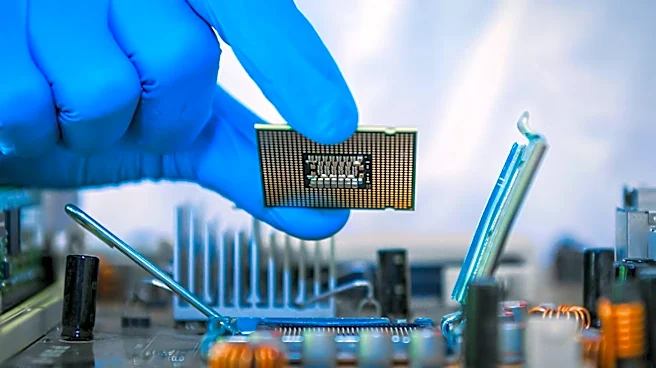
which has extended beyond major technology companies to a broader network of suppliers. Semiconductor and semiconductor-equipment companies have been the primary beneficiaries, with chip-related companies accounting for 16 of the Russell 2000's 50 best-performing stocks this year. Companies like Aehr Test Systems, Ichor Holdings, and MaxLinear have seen their stocks rally by more than 400%. The rally is attributed to both a valuation catch-up and fundamental improvements in small-cap stocks, as noted by Amy Zhang, a portfolio manager at Alger.
Why It's Important?
The surge in small-cap stocks highlights the significant impact of AI investment on the broader market, particularly for semiconductor and technology hardware companies. This trend suggests a shift in market dynamics where small-cap stocks are gaining prominence amid a mega-cap-driven bull market. The growth in small-cap stocks reflects a broader optimism about profit growth extending beyond the largest technology companies. This development is crucial for investors as it indicates a diversification of growth opportunities within the stock market, potentially leading to more balanced investment portfolios.
What's Next?
As the AI investment boom continues, small-cap stocks are expected to maintain their momentum, provided interest rates remain stable. Investors and market strategists will likely monitor the performance of semiconductor and technology hardware companies closely, as these sectors are pivotal to sustaining the current growth trajectory. Additionally, the focus may shift towards identifying other sectors that could benefit from the AI infrastructure expansion, potentially leading to further diversification of investment opportunities.