





What's Happening?
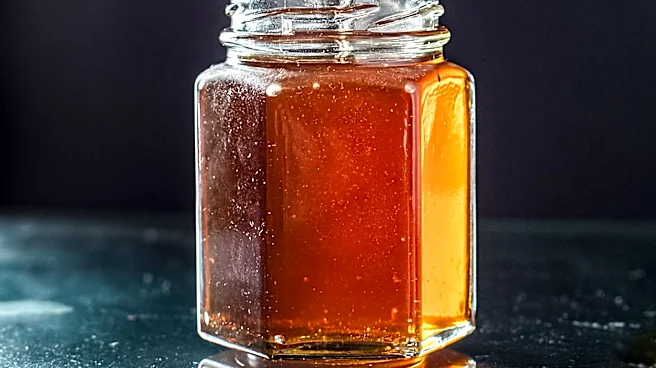
Honey is gaining traction as a preferred sweetener in food formulations due to its natural composition and marketability. With over 180 components, including antioxidants, minerals, and vitamins, honey offers a complex flavor profile that varies by region
and flower type. This variability affects its sweetness and color, ranging from nearly colorless to dark brown. The Sioux Honey Association Cooperative highlights that darker honey, often sourced from southern states like Texas, carries more flavor than lighter varieties from the Upper Midwest. Honey's unique properties, such as its ability to enhance the Maillard reaction in baked goods and elevate the flavor of spices, make it a versatile ingredient in various food products, including dressings, sauces, and baked goods.
Why It's Important?
The increasing use of honey in food formulations aligns with consumer demand for clean label products, which emphasize natural ingredients over artificial additives. This trend is significant for the food industry as it seeks to cater to health-conscious consumers wary of ultra-processed foods and non-nutritive sweeteners. Honey's natural sweetness and complex flavor profile offer a compelling alternative to traditional sweeteners, potentially driving innovation in product development. The ability to market honey as a natural ingredient can enhance brand appeal and consumer trust, providing a competitive edge in the crowded food and beverage market.
What's Next?
As the demand for clean label products continues to grow, food manufacturers may increasingly turn to honey as a key ingredient in reformulating existing products and developing new ones. This could lead to a broader range of honey-infused products across various categories, from beverages to baked goods. Additionally, the focus on regional sourcing and flavor profiles may encourage more localized production and marketing strategies, appealing to consumers interested in supporting local agriculture and sustainable practices.