






What's Happening?
Ørsted, in collaboration with PGE (Poland), Semco Maritime, and PTSC M&C (Vietnam), has successfully completed the loading and export of four offshore substations for the Baltica 2 offshore wind project. The substations, fabricated and commissioned in Vietnam by
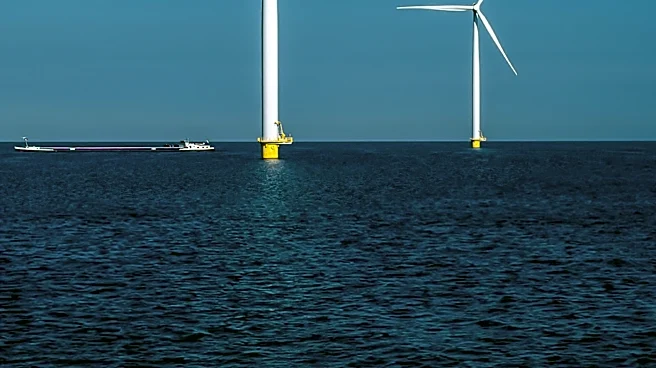
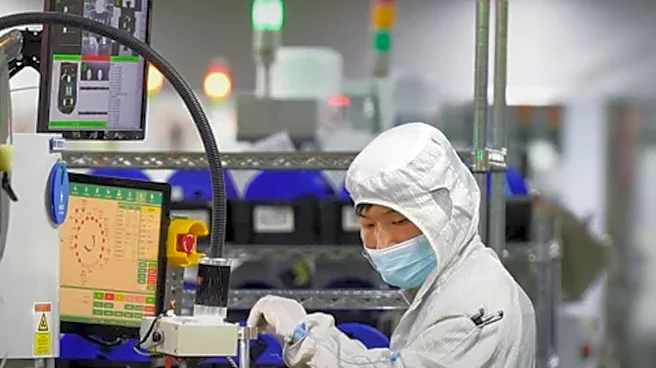
PTSC M&C, are now en route to Europe, with two already in transit and the remaining two loaded onto barges. This marks a significant milestone for the Baltica 2 project, which is a 1.5 GW offshore wind farm located in the Baltic Sea off the coast of Poland. The project, comprising 107 wind turbines and four 375 MW offshore substations, is expected to become operational in the fourth quarter of 2027 and will supply electricity to approximately 2.4 million Polish households. The consortium was awarded the Engineering, Procurement, and Construction (EPC) contract for these substations in June 2023, with PTSC M&C responsible for the fabrication, installation, and onshore commissioning in Vietnam. The project involved over 2,000 direct laborers during peak periods and achieved 5 million safe working hours without lost-time accidents by April 2026.
Why It's Important?
This development is important as it highlights the growing international collaboration and supply chain diversification in the offshore wind energy sector. The successful fabrication and export of complex offshore wind infrastructure from Vietnam to Europe demonstrates the expanding global capabilities in renewable energy manufacturing. For Ørsted, a major developer and operator in offshore wind, this project reinforces its commitment to large-scale renewable energy initiatives and its ability to manage complex international supply chains. The Baltica 2 project itself is crucial for Poland's energy transition, contributing a substantial amount of renewable energy to its grid and reducing reliance on traditional power sources. The involvement of Vietnamese companies like PTSC M&C in such a significant European project also signifies the increasing role of Asian manufacturers in the global offshore wind market, potentially leading to more competitive pricing and diversified manufacturing hubs for future projects.
What's Next?
Following the successful export, the next phase involves the offshore transportation and installation of the four substations in the Baltic Sea. Installation and connection work offshore Poland are scheduled to commence in November 2026. Once installed, the substations will undergo further connection, testing, and commissioning before being integrated with the wind turbines and the onshore transmission system. The Baltica 2 project is anticipated to begin supplying electricity to Polish households from the fourth quarter of 2027. The continued partnership between Ørsted, PGE, Semco Maritime, and PTSC M&C will focus on ensuring the safe and successful operation of the project. This collaboration could also pave the way for future projects involving Vietnamese expertise in the European offshore wind supply chain, further solidifying Vietnam's position as a key player in renewable energy infrastructure manufacturing.
Beyond the Headlines
The successful execution of the Baltica 2 substation project by a Vietnamese firm for a European wind farm underscores a broader trend of globalization in the renewable energy sector. This cross-continental collaboration not only facilitates the rapid deployment of green energy infrastructure but also fosters knowledge transfer and technological advancements across different regions. It highlights the increasing importance of robust and diversified supply chains to meet ambitious global renewable energy targets. Furthermore, the project's emphasis on safety, achieving 5 million safe working hours, sets a benchmark for large-scale industrial projects, demonstrating that complex international endeavors can be executed with high safety standards. This model of international partnership could become a blueprint for other nations looking to develop their renewable energy capabilities and participate in the global green economy, potentially leading to more equitable distribution of manufacturing and economic benefits in the clean energy transition.