
What's Happening?
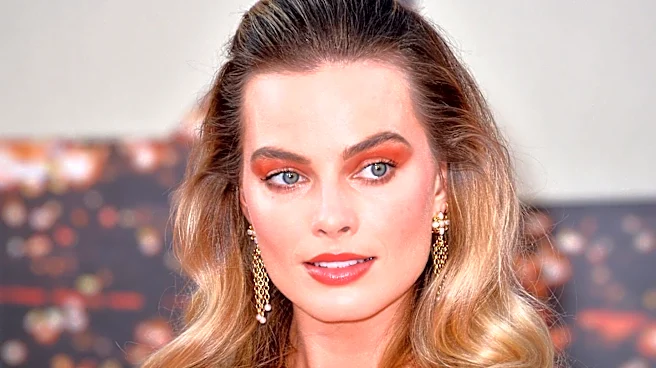
Margot Robbie's portrayal of Jane Clayton in the 2016 film 'The Legend of Tarzan' is highlighted as a continuation of a century-old Hollywood tradition. While Robbie gained significant fame for roles in 'The Wolf
of Wall Street' and as Harley Quinn in 'Suicide Squad,' her role as Jane is noted for its place in a long lineage of actresses playing the iconic character. The film itself received mixed reviews, with critics generally praising the performances, including Robbie's, but citing issues with pacing, story, and special effects. Despite the film's lukewarm reception and subsequent fading from public memory, Robbie's performance as Jane is considered by some to be among the best iterations of the character, though Maureen O'Sullivan's portrayal remains a benchmark. The character of Jane, originating from Edgar Rice Burroughs' 1912 novels, has been consistently adapted for the screen since 1918, making it one of Hollywood's most enduring roles.
Why It's Important?
This story underscores the enduring legacy of classic literary characters in Hollywood and the continuous cycle of reinterpretation in filmmaking. Margot Robbie's participation in this tradition, even in a less-remembered film, demonstrates how contemporary stars connect with cinematic history. It highlights the challenge of revitalizing long-standing franchises for modern audiences, as 'The Legend of Tarzan' struggled to resonate despite strong star power. The consistent portrayal of Jane across nearly a century also reflects broader trends in character longevity and audience engagement with established narratives. For the entertainment industry, it illustrates the balance between leveraging recognizable intellectual property and the need for fresh, compelling storytelling to achieve critical and commercial success. The discussion also implicitly raises questions about which performances become iconic and why some films, despite quality acting, fail to leave a lasting cultural footprint.
What's Next?
While 'The Legend of Tarzan' may not be widely remembered, the continuous nature of Hollywood's adaptation of classic characters suggests that Jane, and the Tarzan universe, will likely see future iterations. The industry consistently revisits established properties, and the long history of Jane's portrayal indicates a strong potential for new films or series. Future adaptations will likely face the same challenges of balancing tradition with contemporary appeal, potentially exploring different narrative angles or character interpretations. For Margot Robbie, her career trajectory has moved towards other high-profile roles, but her involvement in such a historically significant role adds to her diverse filmography. The ongoing demand for recognizable characters in an increasingly competitive entertainment landscape means that the tradition of reinterpreting roles like Jane will almost certainly continue, with new actresses taking on the mantle in years to come.
Beyond the Headlines
The enduring presence of characters like Jane in cinema for over a century speaks to a deeper cultural fascination with archetypal narratives and the human desire for escapism. The character's evolution, from her literary origins to various cinematic portrayals, reflects changing societal views on gender roles, adventure, and the 'wild.' While Robbie's Jane was depicted as a 'feisty heroine,' earlier versions might have emphasized different qualities, showcasing how cultural shifts influence character development. This longevity also highlights the power of intellectual property in the entertainment industry, where characters can transcend generations of actors and filmmakers. The relative obscurity of Robbie's performance in this particular role, despite its historical significance, also prompts reflection on the subjective nature of cinematic legacy and how certain performances or films become more ingrained in collective memory than others, often influenced by critical reception, box office success, and cultural zeitgeist.