







What's Happening?
The global edge AI software market is forecast to expand significantly, growing from $20.73 billion in 2026 to $120.31 billion by 2032, according to a new report from Research and Markets. This substantial growth is driven by increasing demand for low-latency
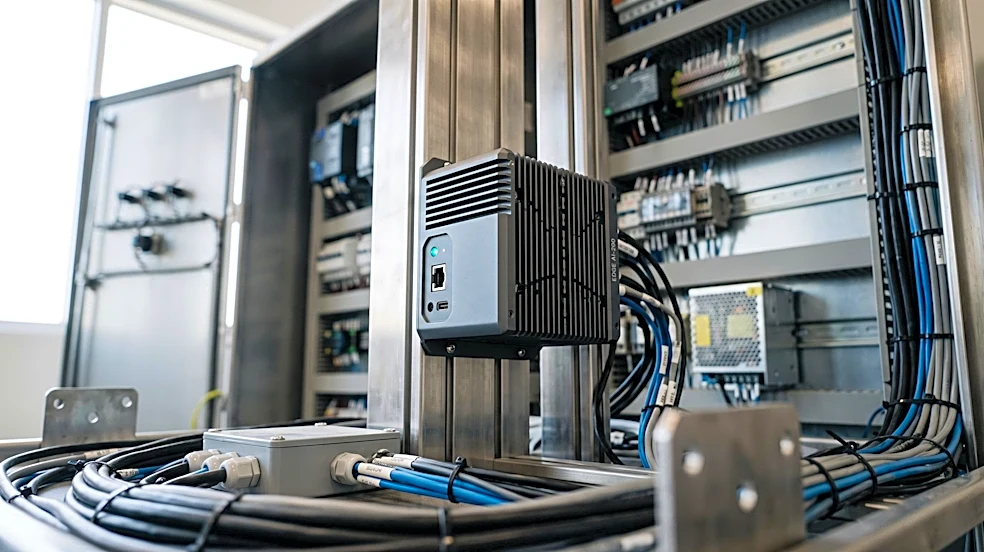
inference and localized data control. The report highlights that advancements in endpoint computing capabilities are shifting deployments from traditional computer vision and predictive analytics to more sophisticated speech, multimodal, and generative AI applications. This shift necessitates lightweight AI runtimes, hardware-aware optimization, and software platforms that can maintain consistent performance across diverse processor architectures and environments with limited compute, memory, and power. The device edge segment is expected to hold the largest share of the edge AI software market in 2026, fueled by the growing ability of devices like cameras, robots, vehicles, and embedded systems to process AI workloads locally. Key adoption factors include immediate decision-making, bandwidth efficiency, data privacy, and operational continuity.
Why It's Important?
The rapid expansion of the edge AI software market signifies a critical shift in how artificial intelligence is deployed and utilized across various U.S. industries. For businesses, this means enhanced operational efficiency, improved data privacy by processing sensitive information locally, and faster decision-making capabilities, particularly in sectors like manufacturing, healthcare, and automotive. The move towards on-device generative and multimodal AI will enable more sophisticated applications, such as local AI assistants and natural-language interfaces, reducing reliance on continuous cloud connectivity. This trend will create significant opportunities for technology companies specializing in AI software, hardware optimization, and deployment platforms. Companies like AWS, Microsoft, Google, and Siemens, among others profiled in the report, stand to gain from this market surge. Conversely, businesses that fail to adapt to edge AI solutions may face competitive disadvantages in terms of speed, data security, and operational costs, impacting their market position and profitability.
What's Next?
The market is expected to see continued innovation in model efficiency, memory utilization, hardware portability, and enterprise data integration. The increasing adoption of on-device generative and multimodal AI will further drive demand for centralized deployment, monitoring, lifecycle management, security, and observability across distributed AI fleets. Generative AI is projected to experience the fastest growth within the AI workload segment, as smaller foundation models, quantization, and optimized inference runtimes make local AI execution more practical. This will lead to an expansion of use cases beyond text generation to include local AI assistants, retrieval-enabled applications, and autonomous software functions. Stakeholders will need to address challenges such as maintaining consistent model accuracy, performance, and reliability across distributed edge environments, as well as managing model updates, version control, and security over long edge lifecycles. The U.S. is expected to maintain leadership in commercial Edge AI deployment, anchored by industrial AI depth and domestic compute investment.
Beyond the Headlines
The proliferation of edge AI has profound implications beyond immediate business benefits. Ethically, processing data closer to its source can enhance privacy and reduce the risks associated with transmitting sensitive information to centralized cloud servers. Legally, this shift may influence data governance frameworks, potentially leading to new regulations around on-device data processing and AI model accountability. Culturally, the integration of AI into everyday devices and systems could lead to a more seamless and personalized interaction with technology, transforming how individuals and organizations operate. The long-term shift towards distributed AI architectures could also foster greater resilience in critical infrastructure by reducing single points of failure associated with centralized cloud systems. However, it also introduces complexities in managing and securing a vast network of intelligent endpoints, requiring robust cybersecurity measures and standardized protocols to prevent vulnerabilities.