






What's Happening?
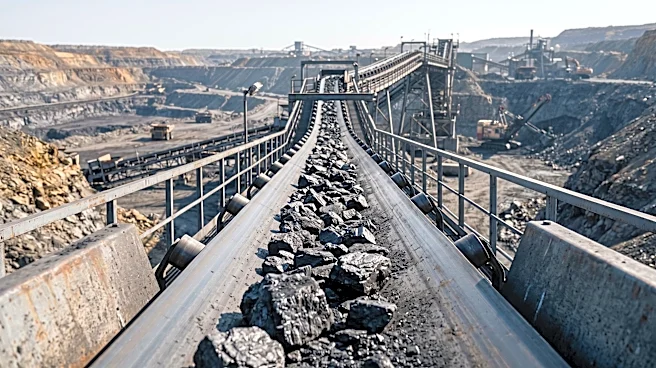
Glencore, a major global commodity producer and trader, is currently under reassessment by the market, with investor attention centered on its operational execution, commodity demand, mine delivery, and project sequencing. The company, which mines copper,
cobalt, zinc, nickel, and coal, also operates a significant marketing business that trades commodities worldwide. Its trading arm is noted for performing well during volatile market conditions. Investors are closely monitoring Glencore's production levels, commodity price trends, the strategic role of its coal business, and its capital return policies. The company's copper assets are primarily located in Africa and South America, and it has expressed intentions to increase copper output while maintaining its substantial coal operations. Based in Switzerland, Glencore's performance is being viewed within the broader context of the Metals and Mining Stocks sector, especially as the UK equity market experiences reassessment following a multi-week low in its leading index. The current market environment emphasizes the importance of resilient demand and clear company communication.
Why It's Important?
The market's reassessment of Glencore holds significant implications for the global commodities sector and broader economic stakeholders. As one of the world's largest players in mining and commodity trading, Glencore's performance and strategic decisions can influence global supply chains and commodity prices, affecting industries reliant on raw materials such as manufacturing, construction, and energy. The focus on 'company-level execution' highlights a shift in investor priorities towards operational efficiency and reliable project delivery, which could set a precedent for how other large mining companies are evaluated. Furthermore, Glencore's strategy regarding its coal business is particularly important given increasing global pressures for decarbonization; its decisions in this area could impact environmental policies and the transition to cleaner energy sources. Any significant changes in Glencore's output or strategy could lead to price fluctuations in key industrial metals and energy commodities, affecting profitability for businesses and potentially consumer costs.
What's Next?
In the immediate future, market attention will remain on Glencore's forthcoming disclosures and operational updates. Investors will be looking for new evidence that justifies a change in expectations, specifically focusing on commentary regarding commodity demand, milestones in mine delivery, and the sequencing of its growth projects. The company's ability to provide transparent communication and demonstrate steady operational delivery that aligns with current market conditions will be crucial. Potential reactions from major stakeholders include increased scrutiny from environmental groups regarding its coal operations and heightened interest from investors in its copper expansion plans, given copper's role in the energy transition. The broader UK equity market's performance, particularly within the mining and energy sectors, will also influence how Glencore's shares are perceived, as benchmark exposure means the company may react to wider market shifts in addition to its own operational developments. Future company announcements are expected to provide a clearer picture of its strategic direction and operational stability.
Beyond the Headlines
Beyond the immediate financial metrics, Glencore's ongoing market reassessment touches upon deeper implications for corporate governance, sustainability, and the future of the global mining industry. The emphasis on 'quality of the next evidence' suggests a growing investor demand for tangible, verifiable progress rather than just strategic announcements, pushing companies towards greater accountability. Ethically, Glencore's continued involvement in coal mining presents a dilemma in an era of climate consciousness, potentially influencing its social license to operate and attracting scrutiny from ESG (Environmental, Social, and Governance) investors. Legally, evolving international regulations on carbon emissions and environmental protection could impact the viability and profitability of its coal assets, necessitating strategic shifts. Culturally, the company's ability to adapt to changing global priorities, balancing commodity demand with environmental responsibility, will shape its long-term reputation and stakeholder relationships. This period of reassessment could trigger broader shifts in how large commodity producers are valued, with a greater premium placed on sustainable practices and transparent operational execution.