







What's Happening?
Tillie Walden's graphic novel 'Charity & Sylvia,' published by Drawn & Quarterly, has come under scrutiny from historian Rachel Hope Cleves. Cleves claims that the book is an adaptation of her own work, 'Charity & Sylvia: A Same-Sex Marriage in Early
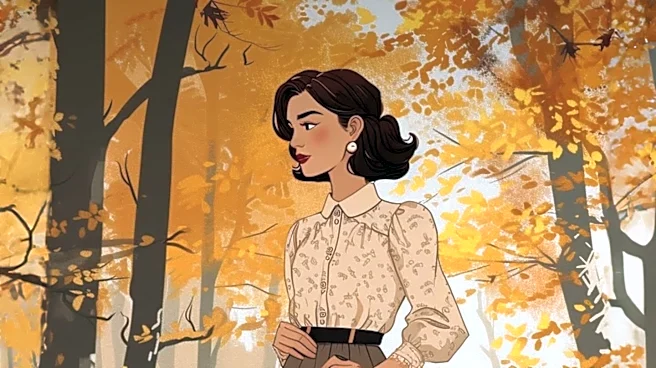
America,' and that Walden and the publisher did not adequately credit her contributions. Cleves acknowledges that Walden reached out during the writing process and cited her book, but argues that the acknowledgment was insufficient. Walden, who serves as Vermont's cartoonist laureate, was inspired to depict the story of Charity Bryant and Sylvia Drake, a 19th-century lesbian couple, after being approached by Vermont Humanities. Drawn & Quarterly has defended Walden, stating that her afterword credits Cleves' research and that an online archive provides detailed citations.
Why It's Important?
This controversy highlights ongoing issues in the publishing industry regarding intellectual property and the acknowledgment of source material. The dispute underscores the challenges faced by historians and authors in ensuring their work is properly credited, especially when adapted into different formats. The case also raises questions about the balance between creative adaptation and academic integrity. For Drawn & Quarterly, the situation could impact its reputation and relationships with authors and historians. For Cleves, the concern is that Walden's graphic novel might overshadow her original work, affecting her academic recognition and potential future opportunities.
What's Next?
The resolution of this dispute may involve further discussions between Cleves, Walden, and Drawn & Quarterly. Cleves has expressed dissatisfaction with the publisher's response and may seek additional acknowledgment or compensation. The outcome could set a precedent for how similar cases are handled in the future, particularly in the realm of graphic novels and adaptations. Stakeholders in the publishing industry will likely watch closely to see how this situation unfolds, as it may influence future practices regarding credit and adaptation rights.