




What's Happening?
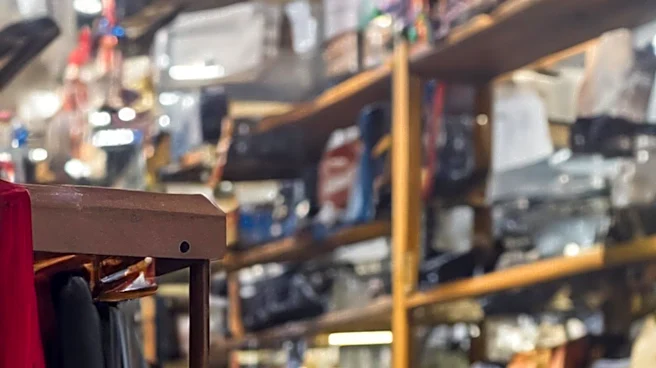
Reed Resale, founded by Allie Reed in Abilene, Texas, has introduced a unique hybrid business model for second-hand fashion. The company combines a physical consignment store with an online boutique, allowing clients to bring in women's clothing which
is then photographed and listed for sale online. Proceeds from sales are split between the store and the clients. Since its inception in April, operating initially from Reed's garage, the business has experienced rapid growth, attracting nearly 6,000 members to its online community. This approach aims to reinvent the second-hand fashion experience by offering both local consignment and broader online accessibility, catering to a growing interest in sustainable shopping practices.
Why It's Important?
This innovative model by Reed Resale is significant for the U.S. retail landscape as it demonstrates a successful adaptation to evolving consumer preferences for sustainable and accessible fashion. By integrating online and offline channels, Reed Resale taps into a wider customer base, offering convenience for both sellers and buyers of pre-owned clothing. This model could serve as a blueprint for other small businesses looking to enter or expand within the second-hand market, which is gaining traction due to environmental concerns and economic factors. The rapid growth and community engagement highlight a strong demand for such services, potentially influencing larger retail strategies and contributing to the circular economy by extending the lifecycle of garments.
What's Next?
The success of Reed Resale's hybrid model suggests a potential for further expansion and replication in other local markets across the U.S. Other entrepreneurs and even established retailers might explore similar integrated approaches to capitalize on the growing second-hand fashion trend. The increasing membership in its online group indicates a strong community-driven aspect that could be further leveraged through events or loyalty programs. As consumer awareness of sustainability continues to rise, businesses adopting such models are likely to see continued growth and influence, potentially leading to more widespread adoption of consignment and resale services as mainstream shopping options.
Beyond the Headlines
The rise of businesses like Reed Resale reflects a broader cultural shift towards conscious consumption and away from fast fashion. This movement is driven by increasing awareness of the environmental impact of textile waste and a desire for unique, affordable clothing options. The model also empowers individuals to participate in the circular economy by easily reselling their unused garments, fostering a sense of community and shared responsibility. This trend challenges traditional retail paradigms and could lead to a more sustainable and equitable fashion industry, where the value of clothing is extended beyond its initial purchase, reducing landfill waste and promoting resource efficiency.