







What's Happening?
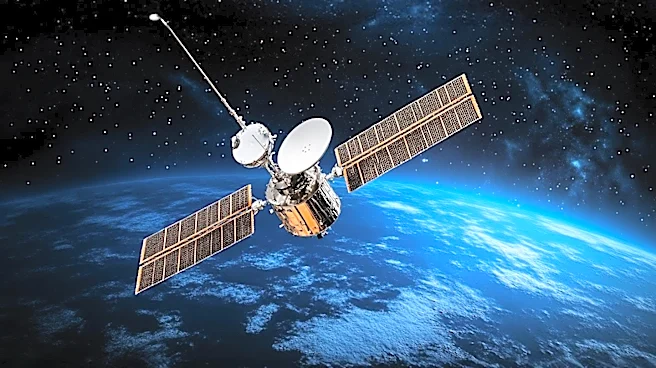
Iridium Communications Inc. has activated Iridium NTN Direct, marking the launch of the world's first standards-based Narrowband Internet of Things (NB-IoT) and direct-to-device (D2D) satellite connectivity service with 100% global coverage. This new
service leverages Iridium's existing low-Earth orbit (LEO) satellite constellation and globally coordinated L-band spectrum. It is designed to extend NB-IoT and D2D connectivity beyond traditional terrestrial networks, enabling mobile network operators, chipset manufacturers, and device makers to integrate satellite connectivity more seamlessly. The service aims to provide reliable connectivity for a wide range of consumer, commercial, and industrial applications, especially in remote areas where cellular coverage is limited or absent. Iridium has also certified Nordic Semiconductor's NRF9151 as the first NTN module for the service, with a public firmware update planned for January 2027 to enable existing modules to support Iridium NTN Direct.
Why It's Important?
The activation of Iridium NTN Direct is a significant development in the telecommunications industry, particularly for the Internet of Things (IoT) and direct-to-device markets. By providing truly global, standards-based satellite connectivity, Iridium is enabling a new era of connected devices that can operate anywhere on the planet. This will have a profound impact on various U.S. industries, including logistics, agriculture, fleet management, and personal safety, by ensuring critical devices and assets remain connected regardless of location. For consumers, it opens up possibilities for enhanced safety features in wearables and personal devices, especially for outdoor enthusiasts. The standardization aspect is crucial as it simplifies integration for device manufacturers and mobile operators, fostering broader adoption and innovation within the IoT ecosystem. This service could also drive economic growth by enabling new business models and improving operational efficiencies across sectors that rely on remote monitoring and communication.
What's Next?
Following the service activation, Iridium will continue to work with ecosystem partners, including Altair Semiconductor, Deutsche Telekom IoT, Mlink Technology, and Vodafone IoT, to accelerate product development and commercial adoption of Iridium NTN Direct. The upcoming firmware update for Nordic Semiconductor's NRF9151 module in January 2027 will allow for the upgrade of currently deployed devices, significantly expanding the reach of the service without requiring new hardware. We can expect to see a proliferation of new products and services integrating this global connectivity, particularly in wearables, asset tracking, and smart agriculture. The initial availability and authorization of the service will vary by jurisdiction, subject to local laws and regulations. The long-term impact will involve further integration of satellite communication as a seamless extension of terrestrial networks, driving innovation in connected technologies.
Beyond the Headlines
This development signifies a broader trend towards ubiquitous connectivity, blurring the lines between terrestrial and satellite communication. The ability to connect devices anywhere on Earth raises important ethical and privacy considerations, particularly regarding data collection and surveillance in remote or previously unconnected areas. Legally, it will necessitate updates to regulatory frameworks to accommodate global satellite IoT services and ensure interoperability and security across different jurisdictions. Culturally, it could transform how industries operate, enabling more efficient resource management, enhanced safety protocols, and entirely new services that were previously unfeasible due to connectivity limitations. The expansion of IoT into every corner of the globe also underscores the increasing reliance on technology for critical infrastructure and daily life, highlighting the need for robust cybersecurity measures and resilient network architectures.