



What's Happening?
A recent article highlights the effectiveness of chair exercises in strengthening hips for individuals over 60, providing an alternative to gym machines. Michael Betts, a personal trainer and director of TRAINFITNESS, emphasizes that hip strength is crucial
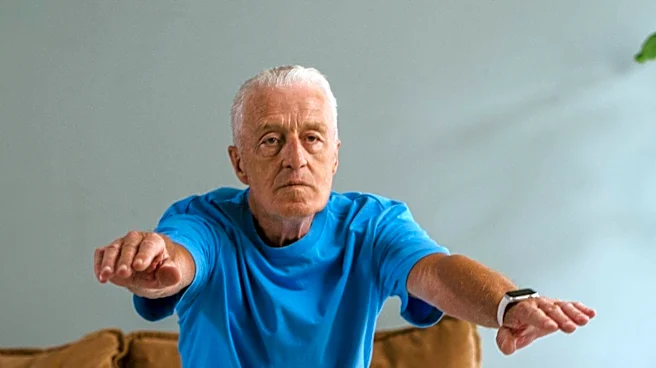
for maintaining independence in older adults. The exercises focus on the glutes, quads, and hamstrings, which are often weakened due to prolonged sitting. The routine includes sit-to-stand exercises, seated marches, standing side leg lifts, and standing hip extensions. These exercises are designed to be performed at home using a sturdy chair, making them accessible and convenient for seniors. The program aims to improve mobility, balance, and confidence, addressing common issues such as hip weakness and mobility loss.
Why It's Important?
The significance of this development lies in its potential to enhance the quality of life for seniors by improving their physical independence. As hip strength is a key predictor of independence, these exercises can help prevent falls and related injuries, which are common concerns for older adults. By offering a gym-free solution, the exercises remove barriers such as cost, accessibility, and intimidation associated with gym environments. This approach not only promotes physical health but also boosts confidence and encourages active lifestyles among seniors, potentially reducing healthcare costs and improving overall well-being.
What's Next?
As seniors incorporate these exercises into their routines, they may experience increased strength and mobility, leading to greater independence in daily activities. Healthcare providers and fitness professionals might consider recommending these exercises as part of a comprehensive wellness plan for older adults. Additionally, further research could explore the long-term benefits of chair exercises on senior health, potentially influencing public health guidelines and senior care practices.
Beyond the Headlines
The broader implications of this development include a shift towards more accessible fitness solutions for seniors, highlighting the importance of functional exercises that mimic everyday movements. This approach challenges traditional gym-based fitness models, emphasizing the need for practical, real-world applications in exercise programs. As the population ages, such innovations in senior fitness could play a crucial role in promoting healthy aging and reducing the burden on healthcare systems.