









What's Happening?
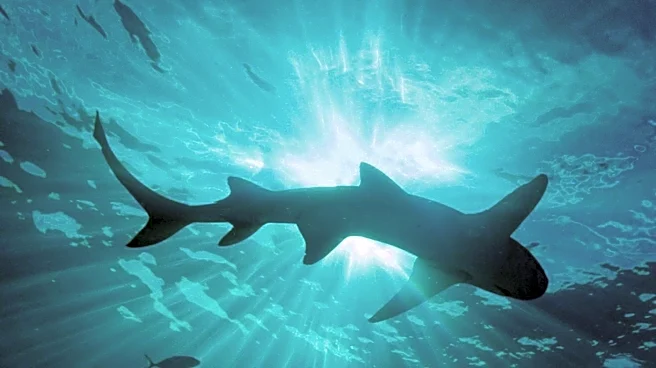
The 14th annual National Geographic SHARKFEST is set to premiere on July 5, featuring a series of programs focused on shark conservation and scientific exploration. The event will showcase various shark species, including the iconic hammerhead, and explore
their habitats and behaviors. In addition to entertainment, SHARKFEST serves as a platform for discussing ocean-related issues such as plastic waste recycling and wave energy. This year's event also highlights a shark-inspired innovation in aviation: AeroSHARK, a fuel-saving adhesive film developed by Lufthansa and BASF. The film mimics sharkskin to reduce drag and improve fuel efficiency in aircraft, demonstrating the potential for bio-inspired technologies in reducing carbon emissions.
Why It's Important?
SHARKFEST not only entertains but also raises awareness about shark conservation and the importance of protecting marine ecosystems. By highlighting the decline of shark populations and the efforts to preserve their habitats, the event underscores the need for sustainable practices in ocean management. The introduction of AeroSHARK in aviation represents a significant step towards reducing the industry's carbon footprint. By leveraging natural designs, such as sharkskin, to enhance fuel efficiency, the aviation sector can achieve substantial environmental benefits. This innovation exemplifies how biomimicry can lead to sustainable solutions across industries, potentially influencing future technological developments.
What's Next?
As SHARKFEST continues throughout July, viewers can expect a range of programs that delve deeper into shark behavior and conservation efforts. The success of AeroSHARK may inspire further research into bio-inspired technologies, encouraging other industries to adopt similar approaches for sustainability. The aviation industry, in particular, may explore additional applications of drag-reducing films to enhance fuel efficiency and reduce emissions. As awareness of these innovations grows, there may be increased investment in research and development, leading to broader adoption of environmentally friendly technologies.