



What's Happening?
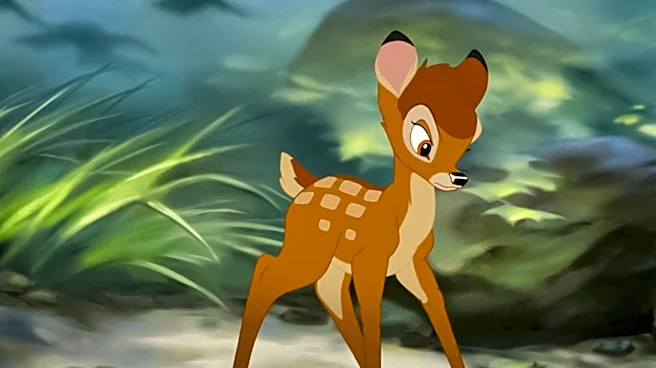
An editorial argues that Disney is increasingly treating its animated films as franchises, leading to an overabundance of sequels and a lack of narrative finality. The author contends that while Disney has historically adapted and reinvented itself, its current
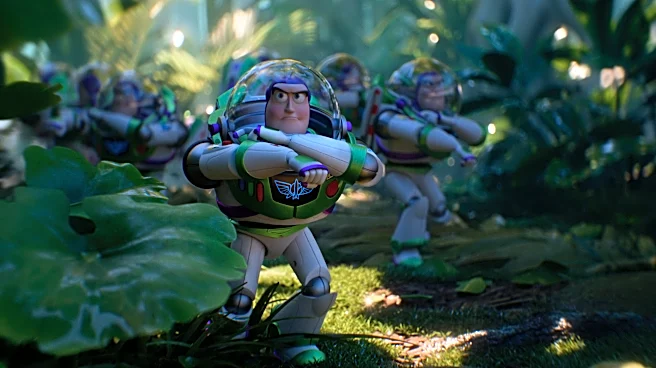
strategy of producing numerous sequels, particularly for popular films like 'Frozen' and 'Moana,' dilutes the impact of original stories. The editorial points out that this trend, which extends to Pixar's catalog with multiple sequels for 'Toy Story' and 'Cars,' contrasts with the traditional 'happily ever after' endings of classic Disney fairy tales. It suggests that this 'Franchise Brain' approach, possibly influenced by Disney's ownership of Marvel and Star Wars, creates continuity overlaps and potential audience fatigue, as seen with the simultaneous release of 'Moana 2' and a live-action 'Moana' film.
Why It's Important?
This critique highlights a significant shift in Disney's creative and business strategy, moving from standalone animated classics to an emphasis on interconnected cinematic universes and continuous narratives. This approach has broad implications for the entertainment industry, as Disney's practices often set trends. The editorial suggests that this strategy risks diminishing the artistic integrity and emotional resonance of individual films by prioritizing ongoing franchises. For audiences, it could lead to a sense of oversaturation and a loss of the definitive endings that traditionally characterized Disney stories. Economically, while sequels can be lucrative, an over-reliance on them might stifle innovation and the development of new, original intellectual properties, potentially impacting long-term creative vitality and market diversity within the animation sector.
What's Next?
The editorial implies a call for Disney to re-evaluate its strategy regarding sequels and franchises. While immediate changes are unlikely given the long production cycles of animated films, continued public and critical discourse on this topic could influence future creative decisions. Disney's upcoming releases, such as 'Frozen 3' and 'Zootopia 2,' will likely be scrutinized through this lens, with audiences and critics assessing whether they offer fresh narratives or merely extend existing ones. The success or failure of these sequels, both critically and commercially, could further shape Disney's approach to its animated film slate. The ongoing debate also encourages other animation studios to consider the balance between leveraging popular franchises and investing in original storytelling.
Beyond the Headlines
The editorial touches upon a broader cultural phenomenon in modern storytelling: the shift from discrete narratives to expansive, interconnected universes. This trend, prevalent in superhero films and fantasy sagas, is now deeply embedded in animated features. The author argues that while this works for certain genres, it fundamentally alters the nature of fairy tales and standalone animated stories, which traditionally offer closure. This raises questions about the impact on narrative structure, character development, and the audience's expectation of a story's conclusion. The 'Franchise Brain' also reflects a business model driven by intellectual property maximization, where characters and worlds are seen as assets to be continuously exploited across various media, potentially at the expense of artistic finality and originality. This could lead to a homogenization of storytelling across major studios.