





What's Happening?
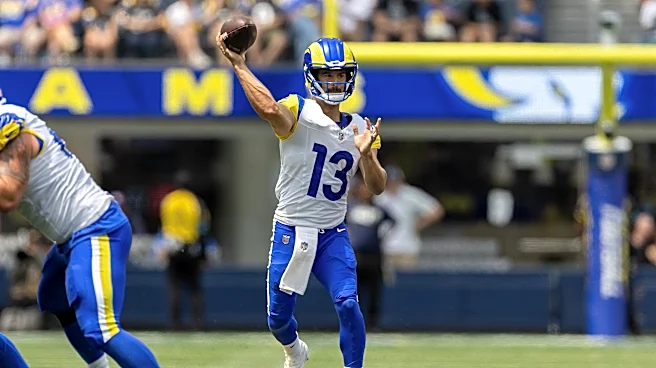
Sports commentator Jason Whitlock expressed his disapproval of actress Brenda Song's enthusiastic commentary during a Los Angeles Rams preseason game against the New Orleans Saints. Song, known for her role in 'The Suite Life of Zach and Cody' and as the wife
of Macaulay Culkin, was a guest commentator for CBS Los Angeles. Her excitement was particularly evident when Alex Cook scored a 100-yard pick-six for the Rams. Whitlock reacted to her commentary by tweeting, 'We're not a serious country,' implying that her presence and demeanor as a commentator were inappropriate for a sports broadcast. This reaction sparked debate among fans, with some defending Song's enthusiasm, especially given it was a preseason game, while others questioned her role.
Why It's Important?
Jason Whitlock's criticism of Brenda Song's guest commentary during a preseason NFL game highlights a recurring tension in sports broadcasting: the balance between traditional, analytical commentary and more personality-driven, entertainment-focused approaches. Whitlock's 'We're not a serious country' comment reflects a segment of sports viewership that values gravitas and perceived professionalism in sports analysis, often viewing celebrity guest appearances as a dilution of the sport's integrity. Conversely, the defense of Song's enthusiasm by fans suggests a desire for more engaging and less rigid broadcasting, especially in preseason games where the stakes are lower. This incident underscores the evolving landscape of sports media, where networks increasingly experiment with different formats and personalities to attract diverse audiences. The debate also touches on the broader question of who is deemed 'qualified' to commentate on sports, and whether passion and celebrity status can be valid attributes alongside traditional sports expertise. For CBS, such guest appearances are often a strategy to generate buzz and appeal to a wider demographic, but they also risk alienating traditional viewers.
What's Next?
The immediate aftermath of Jason Whitlock's comment will likely involve continued discussion among sports fans and media personalities regarding the role of celebrity guest commentators in sports broadcasts. Networks like CBS may evaluate the public reception of such segments, weighing the benefits of increased viewership and social media engagement against potential backlash from traditionalists. For Brenda Song, this incident could either lead to further opportunities in sports commentary, particularly if her enthusiastic style resonates with a significant audience, or it might prompt networks to reconsider the types of personalities they feature. Whitlock, known for his outspoken opinions, will likely continue to voice his perspectives on sports media trends. This event could also influence how future guest commentators are selected and coached, with networks potentially providing clearer guidelines on tone and content to manage audience expectations and avoid similar controversies.
Beyond the Headlines
This incident extends beyond a simple critique of a sports commentator, touching on broader cultural shifts in media consumption and the blurring lines between sports, entertainment, and celebrity culture. Whitlock's 'We're not a serious country' remark, while directed at Song's commentary, can be interpreted as a lament for a perceived decline in seriousness or traditional values across various public spheres. The integration of celebrities into sports broadcasts reflects a strategic move by media companies to capture younger, more diverse audiences who are accustomed to multi-platform content and personality-driven media. This trend challenges the traditional gatekeepers of sports commentary, who often prioritize deep analytical knowledge over entertainment value. The debate also highlights generational differences in how sports are consumed and appreciated, with older demographics often preferring a more purist approach, while younger audiences may be more open to novel and engaging formats. Ultimately, this situation reflects the ongoing negotiation of cultural values within the public discourse, where the 'seriousness' of any given domain is constantly being redefined.