







What's Happening?
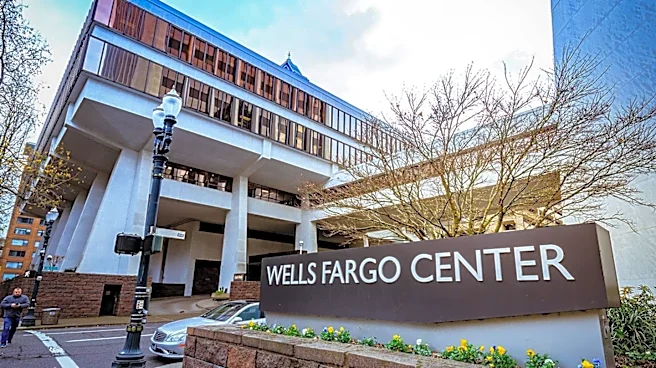
Wells Fargo has identified short-term fixed income investments as a potential safeguard against the current inflationary pressures affecting the market. According to Brian Rehling, co-head of global fixed income and digital asset strategy at Wells Fargo,
short-term U.S. Treasurys, certificates of deposit, and money-market funds are poised for steady gains. These investments are seen as attractive due to their ability to offer income without the high interest rate risk associated with longer-term bonds. The bank's analysis comes in the context of persistent inflation and elevated interest rates, which have made riskier assets like equities less appealing. The Federal Reserve's commitment to maintaining higher rates, influenced by geopolitical tensions such as the Iran war and its impact on energy prices, further supports this investment strategy.
Why It's Important?
The focus on short-term fixed income investments is significant as it provides a strategy for investors to navigate the challenging economic environment characterized by high inflation and interest rates. By opting for these 'boring' investments, investors can potentially secure stable returns while minimizing risk. This approach is particularly relevant as the Federal Reserve continues to prioritize its inflation target, suggesting that interest rates may remain high for an extended period. The strategy also reflects broader market dynamics, where geopolitical events and energy price fluctuations are influencing economic stability and investor sentiment. As such, Wells Fargo's guidance could impact investment decisions across the U.S., affecting portfolios and financial planning.
What's Next?
Investors and financial markets will likely continue to monitor the Federal Reserve's policy decisions and geopolitical developments, particularly those affecting energy prices. The potential for further rate hikes or sustained high rates could reinforce the attractiveness of short-term fixed income investments. Additionally, market participants may adjust their strategies based on inflation reports and economic indicators, seeking to balance risk and return in a volatile environment. The ongoing geopolitical tensions, such as the Iran war, will also be a critical factor in shaping economic forecasts and investment strategies.