






What's Happening?
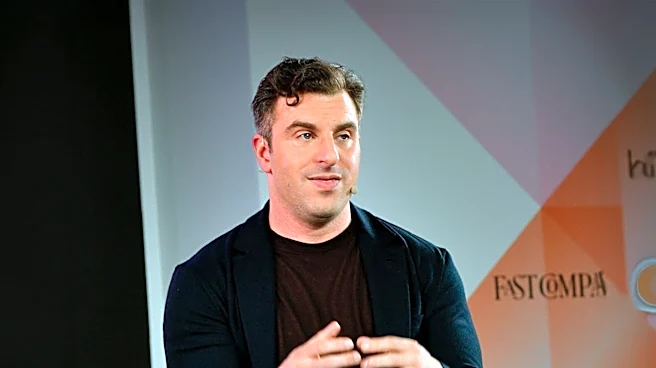
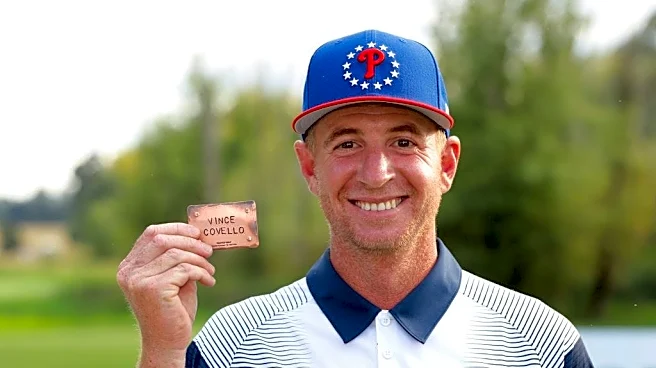
Despite appearing together in some online searches, there is no verified business partnership, family relationship, or shared board seat between Nathan Blecharczyk, co-founder and Chief Strategy Officer of Airbnb, and Gregory J. Hayes, former CEO of RTX
and current Lead Independent Director of Phillips 66. Public records, including SEC filings and proxy statements from both Airbnb and Phillips 66, confirm that the two individuals operate in different industries, hold distinct roles, and have an age difference of 23 years. Blecharczyk, 42, is an executive at a technology and travel platform, while Hayes, 65, is a board governance leader in aerospace, defense, and energy sectors. Blecharczyk's current role at Airbnb involves leading strategic initiatives, while Hayes's current work focuses on board governance for companies like Phillips 66 and BD, and chairing the nonprofit NAF. The source indicates that the appearance of their names together in searches is likely due to automated or templated pairing rather than any actual connection.
Why It's Important?
This clarification is important for maintaining accurate public information and preventing misinformation regarding prominent business figures. In an era where online search results can quickly create perceived connections, verifying the factual basis of such associations is crucial for investors, industry observers, and the general public. Misattributions or incorrect linkages between high-profile executives could lead to misunderstandings about corporate strategies, potential collaborations, or even insider activities. For instance, if a false connection were believed, it could incorrectly influence perceptions of market trends or investment opportunities. The distinction highlights the importance of relying on official corporate filings and verified sources for information about business leaders, rather than uncorroborated online content. It also underscores the differing career paths and influences of these two executives: Blecharczyk's impact stems from founding and growing a major tech company, while Hayes's influence comes from transforming large industrial corporations through strategic portfolio decisions.
What's Next?
The ongoing need for individuals to verify information from official sources will continue, especially as automated content generation and search algorithms evolve. For those researching business leaders, the recommendation remains to consult SEC filings, company proxy statements, and dated press releases to confirm roles, affiliations, and transactions. This practice will help to counteract the spread of inaccurate information that can arise from outdated profiles or algorithmic pairings. Companies and individuals may also need to be more proactive in correcting public record discrepancies if such unverified connections become widespread or impactful. The emphasis on due diligence in information gathering will likely increase as the volume of online content grows, making critical evaluation of sources more essential than ever for informed decision-making in business and finance.
Beyond the Headlines
The phenomenon of unverified connections between prominent figures appearing in online searches points to a broader challenge in the digital information landscape: the struggle between algorithmic content generation and factual accuracy. This issue extends beyond individual executives to potentially impact corporate reputations, market perceptions, and even public trust in information sources. The ease with which disparate pieces of information can be linked, even without a factual basis, highlights the ethical responsibilities of content platforms and the critical need for media literacy among consumers. It also raises questions about how search engines and AI-driven content tools can be refined to prioritize verified data over inferred or templated associations. The case of Blecharczyk and Hayes serves as a micro-example of a macro problem, where the sheer volume of data can sometimes obscure, rather than clarify, factual relationships, necessitating a more rigorous approach to information validation.