








What's Happening?
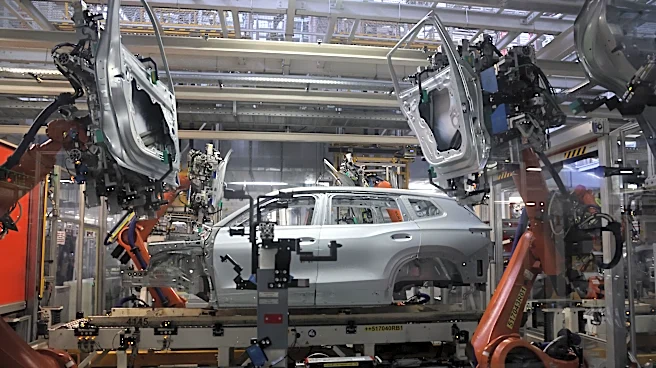
Defense startups are increasingly turning to the automotive and fracking industries to source components for weapons production, significantly reducing costs and production times. Companies like Castelion, which specializes in solid rocket motors and hypersonic
weapons, are utilizing electronic components from the auto industry, such as Field-Programmable Gate Arrays, which are more affordable and quicker to obtain than aerospace-specific versions. Additionally, Castelion is sourcing high-pressure metal tubes from the oil and gas sector, which are used in fracking, to replace more expensive aerospace equivalents. These tubes are capable of withstanding the high heat and pressure required for rocket motors. This approach has allowed Castelion to secure substantial Pentagon contracts for the production of over 500 hypersonic weapons. Similarly, Anduril, another defense startup, is adopting pharmaceutical industry techniques to mix rocket motor propellant, further showcasing the innovative cross-industry strategies being employed.
Why It's Important?
The integration of components from the automotive and fracking industries into defense manufacturing represents a significant shift in how military technology is developed. By leveraging these sectors, defense startups can reduce dependency on traditional aerospace suppliers, which often have longer lead times and higher costs. This not only accelerates the production of critical defense technologies but also enhances the competitiveness of these startups in securing government contracts. The ability to produce advanced weaponry more efficiently and cost-effectively could have substantial implications for national defense capabilities, potentially leading to a more agile and responsive military infrastructure. Furthermore, this trend highlights the growing role of private sector innovation in national defense, which could reshape the landscape of military procurement and development.
What's Next?
As defense startups continue to explore and integrate technologies from other industries, it is likely that more sectors will be tapped for their innovative solutions. This could lead to further diversification of supply chains and a broader range of available technologies for defense applications. The success of companies like Castelion and Anduril may encourage other startups to adopt similar strategies, potentially leading to increased competition and innovation within the defense industry. Additionally, the Pentagon and other government agencies may begin to actively seek out and support these cross-industry collaborations to enhance military capabilities. This could result in policy changes or new initiatives aimed at fostering innovation and reducing costs in defense procurement.