





What's Happening?
HOK, a global design, architecture, engineering, and planning firm, is redefining building performance by integrating resilience, decarbonization, and regenerative design. Historically, these concepts have been treated as separate goals, but a recent
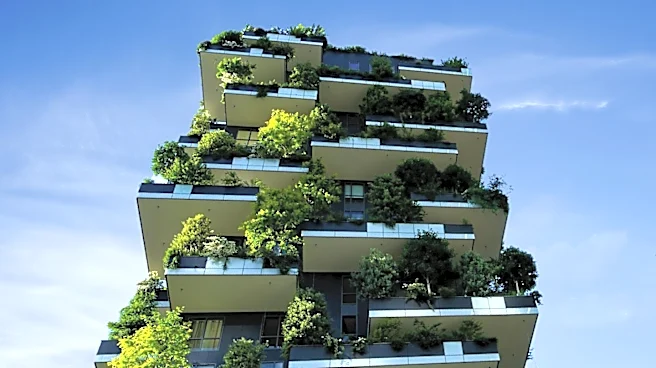
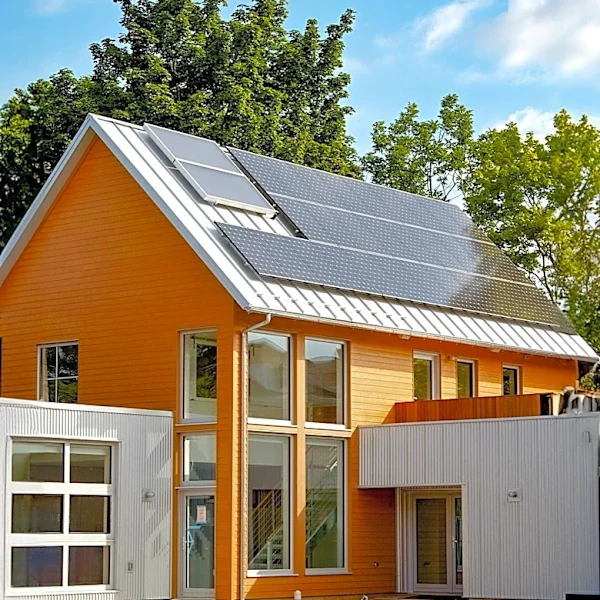
HOK Up Next discussion highlighted their convergence into a unified approach for enhancing performance, managing risk, and creating long-term value in building projects. Ann Kosmal, resilience leader, Apoorv Goyal, decarbonization leader, and Phillip Gangan, regenerative design specialist, emphasized that these disciplines are interdependent and work together to help organizations achieve their objectives. For instance, electrification strategies, when combined with energy storage, can reduce emissions and strengthen resilience. Nature-based design solutions can improve biodiversity and stormwater management while contributing to long-term performance. The firm is developing tools to track whole-life carbon across projects and compare project performance against surrounding natural systems, quantifying benefits like biodiversity and carbon sequestration. This integrated approach moves beyond focusing solely on first costs, considering long-term financial impacts such as business continuity, operational expenses, insurance costs, and adaptability to future compliance requirements.
Why It's Important?
This integrated approach to building performance is critically important for the U.S. construction and real estate industries, as it addresses the escalating challenges of climate change and evolving performance expectations. By combining resilience, decarbonization, and regenerative design, HOK is setting a new standard that can lead to more sustainable, adaptable, and economically viable infrastructure. For property owners and developers, this means a shift from upfront cost considerations to a focus on long-term value, including reduced operational expenses, lower insurance premiums due to enhanced resilience, and compliance with future environmental regulations. This approach can also mitigate financial risks associated with climate-related events, ensuring business continuity and protecting asset value. Furthermore, it promotes the creation of healthier and more productive environments for occupants, contributing to societal well-being. The emphasis on data and new tools for quantifying environmental benefits, such as ecosystem services and carbon sequestration, provides a more robust framework for decision-making, driving innovation in sustainable building materials and technologies. This holistic perspective is essential for developing infrastructure that can withstand future environmental pressures and contribute positively to ecological systems.
What's Next?
The trend initiated by HOK suggests that the U.S. design and construction industry will increasingly adopt integrated approaches to building performance. This will likely lead to a greater demand for professionals with expertise across resilience, decarbonization, and regenerative design. We can anticipate the development of more sophisticated digital tools and analytics to quantify whole-life carbon, assess climate risks, and measure ecosystem services, becoming standard practice in project planning and execution. Regulatory bodies may also begin to incorporate these integrated performance metrics into building codes and certification programs, pushing the entire industry towards higher standards of sustainability and resilience. Furthermore, there will likely be a continued shift in client expectations, with owners prioritizing long-term value, adaptability, and environmental impact alongside traditional cost and schedule considerations. This could foster greater collaboration among designers, engineers, planners, and owners from the earliest stages of a project, ensuring that sustainability goals are embedded rather than added on. The focus will be on creating buildings that are not only energy-efficient but also contribute positively to their surrounding ecosystems and are robust enough to withstand future environmental challenges.
Beyond the Headlines
The convergence of resilience, decarbonization, and regenerative design in building performance signifies a deeper philosophical shift in how humanity interacts with the built environment. It moves beyond merely minimizing harm to actively seeking to restore and enhance ecological systems through design. This approach has profound ethical implications, as it acknowledges the responsibility of the construction industry to contribute to planetary health and intergenerational equity. Culturally, it could foster a greater appreciation for nature-based solutions and a more holistic understanding of sustainability, where buildings are seen as living systems integrated within their natural contexts. The long-term impact could be a transformation of urban landscapes into more biodiverse, climate-adaptive, and resource-efficient environments. This paradigm shift challenges the conventional linear model of construction, promoting circular economy principles where materials are reused, waste is minimized, and buildings actively contribute to carbon sequestration and biodiversity. It also highlights the potential for design to be a powerful tool for addressing complex global challenges, moving beyond aesthetic considerations to embrace a role in ecological and social regeneration.