





What's Happening?
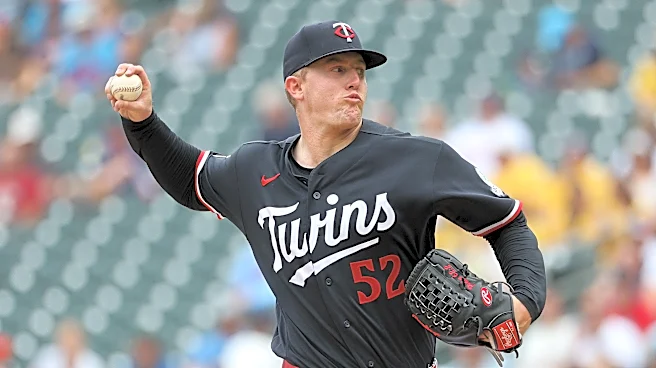
The Minnesota Twins have designated Andrew Morris to serve as the opener for Tuesday's game against the Detroit Tigers, as reported by Dan Hayes of The Athletic. This will be Morris's third time in this role this season. His last appearance as an opener was
on June 4 against the Royals, where he pitched two innings, allowing two runs on five hits and one walk while striking out two batters. Following Morris, Connor Prielipp is considered a candidate to take over as the primary pitcher for the game.
Why It's Important?
The decision to use Andrew Morris as an opener reflects a strategic approach to pitching that many MLB teams employ, particularly to manage pitcher workloads, optimize matchups, or navigate through a challenging part of their rotation. For the Twins, this strategy allows them to potentially limit the exposure of their primary pitcher to the top of the opposing lineup or to provide a different look to the opposing team early in the game. Morris's previous performance as an opener provides a benchmark for what the team might expect. The use of an opener also highlights the evolving tactics in baseball, moving away from traditional starting pitcher roles to more flexible bullpen management.
What's Next?
Andrew Morris will open Tuesday's game against the Tigers, and his performance will be crucial in setting the tone for the Twins' pitching staff. Following his outing, Connor Prielipp is expected to take over as the primary pitcher, and his ability to pitch effectively in relief will be key to the team's success in the game. The Twins' coaching staff will be evaluating the effectiveness of this opener strategy, particularly how Morris performs and how seamlessly the transition to Prielipp occurs. Future decisions regarding Morris's role and the use of openers will likely depend on the outcome of this game and the overall health and performance of the pitching staff.
Beyond the Headlines
The 'opener' strategy, as employed by the Twins, represents a significant tactical innovation in modern baseball. It challenges the traditional model of a single starting pitcher going deep into games and instead leverages the strengths of multiple pitchers in specific situations. This approach can be particularly beneficial for pitchers who excel in short bursts or for teams looking to protect younger pitchers from facing a lineup multiple times. It also underscores the increasing analytical approach to game management in MLB, where data-driven decisions are made to maximize the team's chances of winning. The success or failure of such strategies can influence how other teams approach their pitching rotations in the future.