




What's Happening?
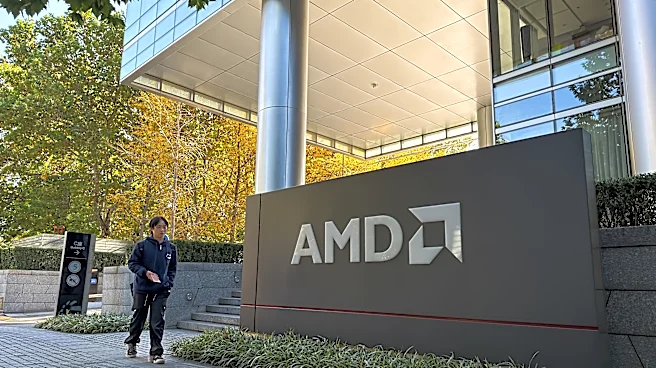
AMD CEO Lisa Su has stated that AMD is now a 'data center-first company,' a declaration underpinned by the company's record $8.5 billion in Data Center revenue during Q3 2026. This strategic shift comes despite a 40% decline in Gaming revenue and an anticipated
double-digit decline in AMD's client and consumer business, which includes Ryzen and Radeon products. Su emphasized AMD's goal to double its data center business by 2027, driven by the increasing demand for computing power to fuel applications, particularly in artificial intelligence. While prioritizing data centers, AMD plans to continue its consumer and gaming product lines, with future developments including Zen 6 processors and RDNA 5 graphics cards.
Why It's Important?
This strategic pivot by AMD is highly significant for the U.S. technology industry and its global market. By focusing on data centers, AMD is positioning itself at the forefront of the burgeoning AI and cloud computing sectors, which are experiencing unprecedented growth. This move could lead to increased competition with other major players in the data center chip market, potentially driving innovation and affecting pricing for businesses relying on these technologies. For consumers, while AMD assures continued support for gaming and consumer products, the 'data center-first' approach suggests that a larger portion of the company's R&D and investment will be directed towards enterprise solutions. This could influence the pace of innovation and product releases in the consumer segment, though AMD's commitment to next-gen processors and graphics cards indicates ongoing development.
What's Next?
AMD's stated goal to double its data center business by 2027 will likely involve aggressive investment in research and development for data center-specific technologies, including AI accelerators and server processors. This could lead to new partnerships and acquisitions within the data center ecosystem. The company will need to navigate the ongoing memory and component shortages affecting the consumer PC market while simultaneously scaling up its data center operations. Competitors in the data center space will undoubtedly respond to AMD's intensified focus, potentially leading to a more dynamic and competitive market. For consumers, the impact on future Ryzen and Radeon product cycles will be closely watched, even as AMD reaffirms its commitment to these segments.
Beyond the Headlines
AMD's shift to a 'data center-first' identity reflects a fundamental change in the technology landscape, where the demand for raw computing power for AI and large-scale data processing is eclipsing traditional consumer market growth. This move highlights the increasing 'intelligence' of computing as a core driver of economic and technological advancement, as articulated by Lisa Su. It also underscores the cyclical nature of the tech industry, where different segments rise and fall in prominence. The long-term implications include a potential reshaping of AMD's brand identity, moving from a primarily consumer-facing CPU/GPU company to a dominant force in enterprise computing. This could also influence talent acquisition, with a greater emphasis on engineers and researchers specializing in data center and AI technologies.