




What's Happening?
In May 2026, the global market for electric vehicles (EVs) saw a significant shift, with battery electric vehicles (BEVs) experiencing a 15% year-over-year increase in sales, while plug-in hybrid electric vehicles (PHEVs) saw a 15% decline. This marks
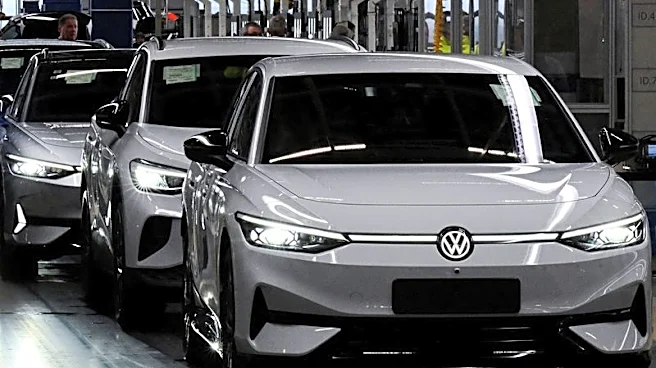
the first time since 2019 that PHEVs have experienced a five-month consecutive decline. The overall plugin vehicle registrations increased by 4% year-over-year, reaching approximately 1.7 million units. BEVs accounted for 71% of all plugin sales in May, highlighting a strong preference for pure electric vehicles over hybrids. The decline in PHEV sales is attributed to structural changes in the market, as incentives in major markets like the U.S. and China have been reduced. The Tesla Model Y led the sales with 93,571 units, followed by the Tesla Model 3 and Geely Xingyuan.
Why It's Important?
The shift towards BEVs over PHEVs indicates a growing consumer preference for fully electric vehicles, driven by advancements in technology and infrastructure. This trend is significant for the automotive industry as it suggests a potential decline in demand for hybrid vehicles, which could impact manufacturers that have heavily invested in hybrid technology. The increase in BEV sales also reflects the global push towards reducing carbon emissions and transitioning to sustainable energy sources. For the U.S. market, this trend could influence policy decisions and encourage further investment in EV infrastructure, such as charging stations, to support the growing number of electric vehicles on the road.
What's Next?
As the market continues to evolve, manufacturers may need to adjust their strategies to focus more on BEVs. This could involve increasing production capacity for electric vehicles, investing in new technologies to improve battery efficiency, and expanding charging infrastructure. Policymakers may also consider revising incentives to further promote the adoption of BEVs. The competition among automakers is likely to intensify, with companies like Tesla and BYD leading the charge in innovation and market share. The ongoing developments in the EV market will be closely watched by industry stakeholders, as they could have long-term implications for the automotive sector and environmental policies.