








What's Happening?
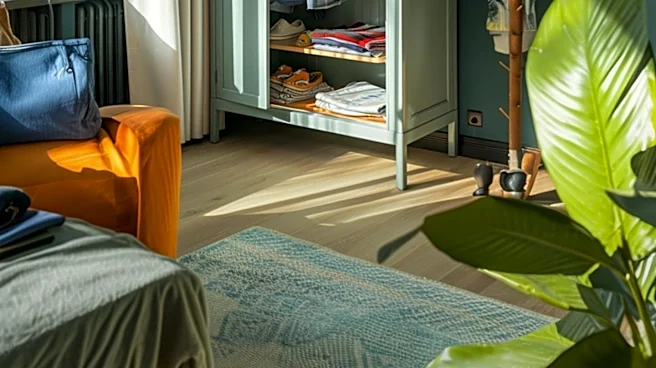
Zara Home has unveiled a new collection in collaboration with film director Luca Guadagnino and production designer and architect Stefano Baisi. This debut collection, described as an 'atlas of desire,' features over 200 pieces, encompassing garments,
scents, lighting, furniture, and homeware. This marks the first commercial venture into furniture and fashion for the duo, who have collaborated for nearly a decade. The idea for the collection originated during Guadagnino's visit to the Marta Ortega Pérez Foundation in Spain, where Zara's headquarters are located. Conversations with Inditex chair Marta Ortega led to concrete plans, and by April 2025, Guadagnino and Baisi were working with the Zara Home team, reportedly given complete creative freedom. The collection extends to a wardrobe for men and women, including trenches, pea coats, tailored suits, and knitwear, alongside home items. The prevalent earthy palette is complemented by jewel-toned satin and sequins, and printed illustrations by Italian artist Francesco Snote appear on clothing and ceramic tableware. Scented candles with blends like verbena, kumquat, and blood orange add another sensory dimension.
Why It's Important?
This collaboration signifies a strategic move by Zara Home to elevate its brand image and expand its market reach beyond fast fashion into more curated and high-end design. By partnering with acclaimed figures like Luca Guadagnino, known for his cinematic aesthetic, Zara Home is tapping into a demographic that values design and artistic influence in their living spaces and personal style. This initiative could set a new precedent for how mass-market retailers engage with creative professionals, potentially blurring the lines between accessible retail and luxury design. The extensive nature of the collection, covering both fashion and home goods, positions Zara Home as a comprehensive lifestyle brand, aiming to offer a complete 'domestic universe.' This could attract a broader customer base seeking cohesive design elements for their homes and wardrobes, while also potentially influencing trends in affordable luxury and designer collaborations within the retail sector. The move also highlights the increasing importance of brand storytelling and artistic partnerships in a competitive global market.
What's Next?
The Baisi Guadagnino for Zara Home collection is scheduled to launch on September 26th on zarahome.com, zara.com, and in select stores worldwide. To mark the launch, a 20-minute short film directed by Guadagnino and written by Scott Z. Burns, starring Jamie Bell, Patricia Arquette, Michael Stuhlbarg, and Chase Sui Wonders, has been created. Additionally, the collection will be presented during Milan Fashion Week on September 26th and 27th at La Pelota event space in Milan. This public pop-up will feature a site-specific installation designed by Luca Guadagnino and Stefano Baisi. The pricing for the collection varies, with fashion items starting at £19.99 for socks and going up to £289 for a leather jacket, while furniture pieces, such as the 'Uncollected' sofa, are priced significantly higher at £11,660, and a table lamp at £399. This tiered pricing strategy suggests an attempt to cater to a range of consumers, from those seeking accessible fashion to those willing to invest in designer home pieces.
Beyond the Headlines
The collaboration between Zara Home and Luca Guadagnino and Stefano Baisi delves into the deeper implications of design accessibility and the democratization of aesthetics. While Zara Home is known for its mass-market appeal, the inclusion of high-priced furniture items like the 'Uncollected' sofa at £11,660 raises questions about the definition of 'accessibility' in such partnerships. This strategy could be seen as an attempt to bridge the gap between high design and everyday consumption, making a curated aesthetic available to a broader audience, albeit with varying price points. The collection's historical reference points, from Viennese Secessionism to Brazilian Modernism, and the explicit nod to Josef Hoffmann's work, highlight a growing trend of incorporating art historical elements into contemporary commercial design. This approach not only enriches the product offering but also educates consumers on design heritage, potentially fostering a greater appreciation for art and design in everyday life. The creative freedom granted to Guadagnino and Baisi also underscores the evolving role of artists and designers in commercial ventures, moving beyond mere product creation to shaping entire brand narratives and experiences.