

What's Happening?
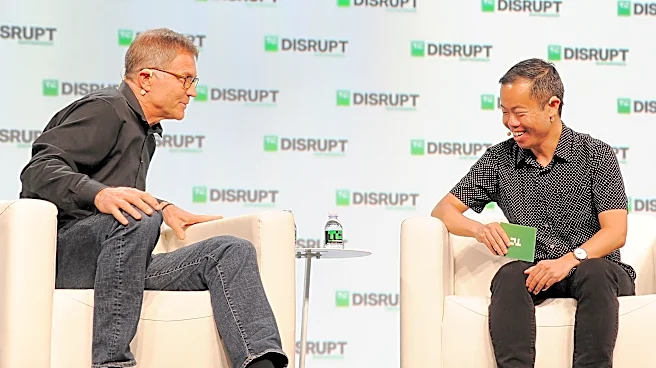
Soumith Chintala, co-creator of PyTorch, has been appointed as the Chief Technology Officer (CTO) of Thinking Machines Lab. This leadership change comes after a period of significant upheaval for the company. In November 2025, Thinking Machines attempted
to raise funds at a $50 billion valuation, but these negotiations stalled by January 2026. During this same period, four of the six co-founders departed, with three returning to OpenAI and one moving to Meta. Chintala's appointment is seen as a move to stabilize the company's technical leadership. Thinking Machines, established in February 2025, initially secured a $2 billion seed round in July 2025 at a $12 billion post-money valuation, led by a16z with participation from NVIDIA, AMD, and others. The company's core product, Tinker, a cloud-based fine-tuning API, was launched in October 2025.
Why It's Important?
The appointment of Soumith Chintala, a prominent figure in the machine learning community due to his work on PyTorch, signals a strategic effort by Thinking Machines to reinforce its technical foundation and regain stability. The departure of a majority of its co-founders and the failure of a major funding round at a high valuation highlight the volatile nature of the AI startup landscape. Chintala's expertise in advanced AI algorithms and open-source machine learning software could be crucial for the company's product development and market positioning. This move also underscores the ongoing talent war in the AI sector, where experienced leaders are highly sought after to navigate rapid technological advancements and intense competition. The company's ability to attract and retain top talent like Chintala will be critical for its long-term viability and its capacity to compete with established players and other well-funded startups.
What's Next?
Following Soumith Chintala's appointment, Thinking Machines is expected to focus on solidifying its product strategy and regaining investor confidence. In March 2026, NVIDIA made an undisclosed strategic investment in Thinking Machines and entered into a long-term computing power cooperation agreement, further integrating Thinking Machines into NVIDIA's ecosystem. This partnership could provide the necessary resources and stability for the company to advance its core product, Tinker, and explore new applications. The company will likely aim to demonstrate tangible progress in its commercial model and product offerings to attract future investment and talent. The AI industry will be watching to see if Chintala's leadership can steer Thinking Machines towards sustainable growth and innovation, especially given the previous challenges with funding and co-founder retention.
Beyond the Headlines
The trajectory of Thinking Machines, marked by rapid valuation increases followed by significant internal turmoil and a high-profile leadership change, reflects broader trends and challenges within the AI startup ecosystem. The initial high valuation, despite a lack of disclosed products or clear direction, highlights the speculative nature of early-stage AI investments, often driven by the reputation of founders. The subsequent struggles underscore the importance of a robust business model and product execution beyond initial hype. The return of co-founders to established giants like OpenAI and Meta also points to the gravitational pull of larger, more stable entities in the AI space, which can offer more resources and a clearer path to impact. The strategic investment from NVIDIA suggests a growing trend of hardware giants integrating vertically with promising AI software companies, aiming to create synergistic ecosystems that benefit both parties.