





What's Happening?
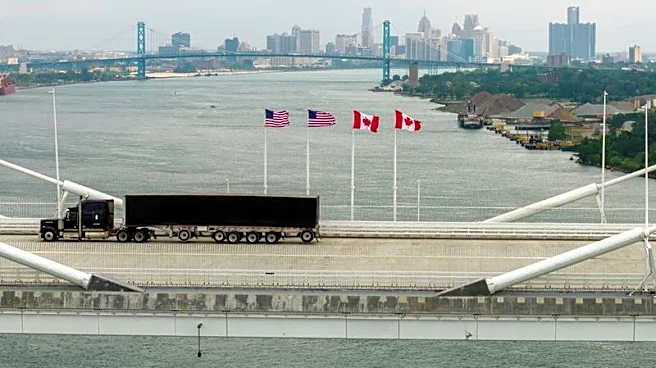
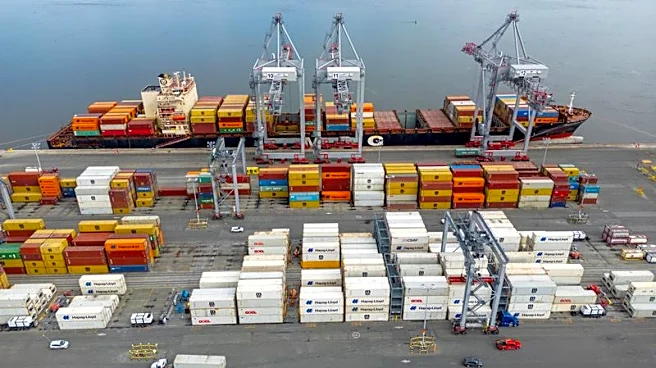
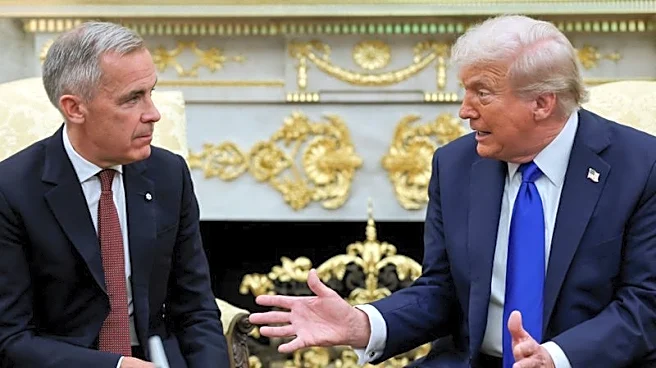
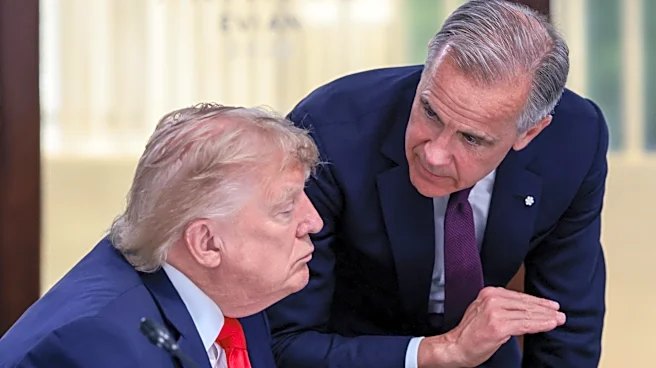
President Donald Trump announced a last-minute deal with Canada to delay 50 percent tariffs on billions of dollars of Canadian goods, just hours before the midnight deadline. The tariffs, if enacted, would have applied to approximately $20.2 billion worth
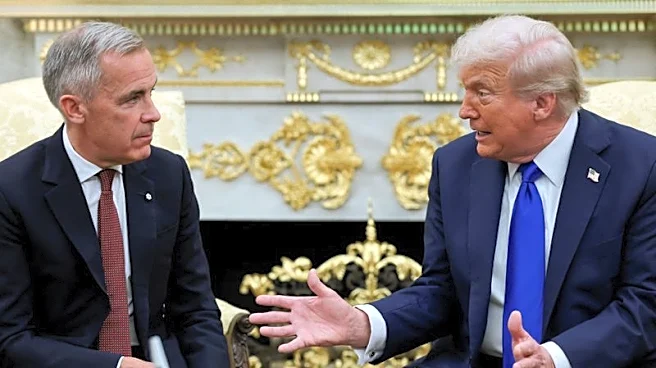
of Canadian exports, including electronics, industrial machinery, furniture, dairy products, and wine. President Trump posted on Truth Social that he had 'paused the 50% Tariffs against Canada' for a three-day period, based on an agreement 'subject to the finalization of documents.' Canadian Prime Minister Mark Carney confirmed the U.S. had agreed to suspend the tariffs until August 22, acknowledging 'substantial progress' but noting 'important work still to be done.' Neither leader provided specific details of the agreement, but President Trump appeared to link the breakthrough to his efforts to revive the Keystone XL Pipeline, which was previously halted by former President Joe Biden.
Why It's Important?
This eleventh-hour agreement provides a temporary reprieve from a potential trade war that would have significantly impacted the economies of both the U.S. and Canada. Canada is the largest export market for the U.S., and approximately 70 percent of Canadian exports go to the U.S. The imposition of such steep tariffs would have disrupted supply chains, increased costs for consumers, and potentially led to retaliatory measures from Canada, further escalating trade tensions. The use of Section 338 of the Tariff Act of 1930, invoked by President Trump, is notable as it allows for tariffs without an investigation, signaling an aggressive approach to trade policy. The inclusion of the Keystone XL Pipeline in President Trump's announcement suggests a broader negotiation strategy that extends beyond immediate trade imbalances, potentially leveraging economic pressure to achieve political objectives related to energy infrastructure. The pause in tariffs offers a crucial window for negotiators to solidify a more permanent resolution.
What's Next?
The three-day pause sets a tight deadline for U.S. and Canadian officials to finalize the details of their agreement. The focus will be on formalizing the commitments made, which are expected to address U.S. grievances regarding Canada's 'discriminatory treatment' of U.S. automobiles, dairy products, and alcoholic drinks. Canadian officials have been in Washington seeking to persuade the Trump administration to drop the tariffs in exchange for trade concessions, including potentially removing retaliatory tariffs on U.S. cars and addressing dairy-quota allocations. The outcome of these negotiations will determine whether the tariffs are permanently averted or if they will be reinstated after the three-day period. The involvement of the Keystone XL Pipeline also suggests that future discussions might encompass energy policy and infrastructure projects, adding another layer of complexity to the bilateral relationship.
Beyond the Headlines
The recurring trade disputes between the U.S. and Canada under President Trump's administration highlight a shift in the traditionally cooperative relationship between the two allies. President Trump's willingness to use tariffs as a primary tool in trade negotiations, even against close partners, signals a broader protectionist stance that challenges established international trade norms. The invocation of Section 338 of the Tariff Act of 1930, a rarely used provision, underscores a more unilateral approach to trade policy. This dynamic creates uncertainty for businesses and industries reliant on cross-border trade, forcing them to adapt to unpredictable policy changes. Furthermore, the public sentiment in Canada, which has shown increasing defiance against U.S. trade threats, suggests that any concessions made by Ottawa will be scrutinized domestically, balancing economic necessity with national pride and sovereignty. The long-term implications could include a re-evaluation of the United States-Mexico-Canada Agreement (USMCA) and a more cautious approach to trade relations between the two countries.