





What's Happening?
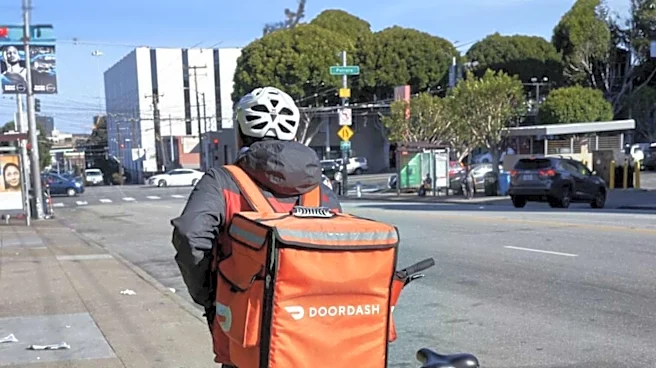
DoorDash (NasdaqGS:DASH) and Lyft have launched 'Lyft Go,' a joint membership program designed to bundle rideshare and food delivery perks for subscribers. This integrated plan aims to combine regular ride usage with recurring DoorDash orders under a single
subscription, fostering increased engagement across both platforms. Concurrently, DoorDash has introduced $12 Meal Boxes with no delivery fees in over 20 U.S. cities, targeting budget-conscious diners. These initiatives are part of DoorDash's broader strategy to shift from one-off takeaway orders to a more comprehensive, higher-margin platform. The company is focusing on expanding subscriptions, advertising, and new categories like grocery delivery to diversify its earnings load. Analysts anticipate DoorDash will continue to broaden its platform beyond restaurants and across more regions, with subscriptions, advertising, and autonomy contributing to a wider profit pool not yet fully reflected in reported results.
Why It's Important?
The partnership between DoorDash and Lyft, along with the introduction of $12 Meal Boxes, signifies a strategic move by DoorDash to deepen its presence in the subscription economy and enhance customer loyalty. By bundling services, DoorDash aims to increase user engagement and frequency, which is crucial for recurring revenue models. This strategy also addresses the growing demand for affordability among consumers, particularly in the competitive on-demand delivery market. The expansion into new categories like grocery and the emphasis on subscriptions and advertising are vital for DoorDash to achieve higher profit margins and reduce its reliance on traditional restaurant delivery. This shift is important for the company's long-term financial health and its ability to compete with other platforms like Uber Eats and Instacart, which are also targeting budget-conscious users and expanding their service offerings. The success of these initiatives will determine DoorDash's ability to maintain profitability while scaling its operations.
What's Next?
DoorDash's future efforts will likely focus on integrating the 'Lyft Go' membership and the $12 Meal Boxes into its broader platform strategy, aiming to convert one-time users into loyal subscribers. The company will need to carefully manage the balance between offering attractive perks and maintaining profitability, especially as it expands into new verticals and faces ongoing regulatory pressures. The success of these initiatives will be measured by their ability to drive recurring engagement and increase the mix of services users rely on the platform for. Analysts expect DoorDash to continue exploring opportunities in advertising and autonomous delivery, which are seen as key contributors to a wider profit pool. The company's ability to sustain Q3-level profitability while scaling these new offers will be a critical indicator of its strategic effectiveness. Further expansion into grocery and retail operations will also be closely watched as DoorDash seeks to diversify its revenue streams and solidify its position in the broader commerce platform market.
Beyond the Headlines
The collaboration between DoorDash and Lyft, and DoorDash's push for subscription models and budget-friendly meal options, reflects a significant evolution in the on-demand service industry. This trend suggests a move towards 'super-apps' or integrated platforms that offer a wide array of services under one umbrella, aiming to capture a larger share of consumer spending and loyalty. The focus on affordability, particularly with the $12 Meal Boxes, highlights the increasing price sensitivity of consumers and the intense competition among delivery platforms. This could lead to a 'race to the bottom' in pricing, potentially impacting the profitability of all players in the long run, unless innovative solutions for cost efficiency are found. Furthermore, the emphasis on subscriptions and advertising indicates a strategic shift towards higher-margin revenue streams, moving away from the often-thin margins of pure delivery services. This could reshape the business models of gig-economy companies, pushing them to become more diversified and less reliant on single-service offerings.