


What's Happening?
Mitch Joel, formerly of Six Pixels of Separation, is prompting a re-evaluation of the conversation surrounding artificial intelligence and its impact on the workforce. Instead of focusing solely on which jobs AI will replace, Joel suggests a more critical
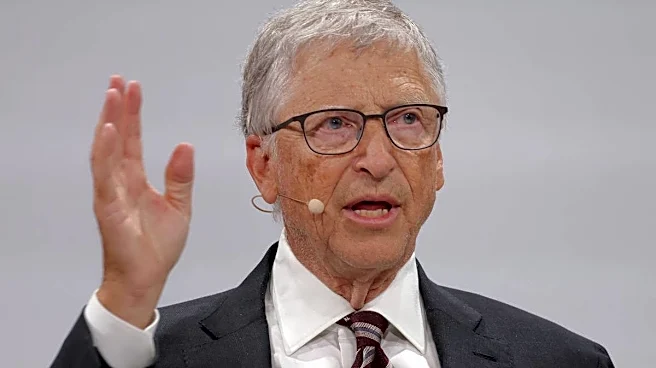
question: what work should remain human, even if AI is capable of performing it? This perspective shifts the discussion from economic efficiency to human values. Joel references Bill Gates's recent note, "The Turbulent AI Era Is Here. The Choices We Make Now Are Critical," which highlights governments' unpreparedness for the social and labor market transitions AI may bring. Joel argues that work provides more than just economic transactions; it offers independence, purpose, status, and dignity, and fosters valuable human interactions and community. He questions whether the pursuit of efficiency, which AI embodies, should always override the inherent value of human involvement in certain tasks.
Why It's Important?
This discussion is crucial for U.S. society and policy-makers as it challenges the prevailing, often economically driven, narrative around AI adoption. By asking what work *should* remain human, Joel introduces ethical and societal considerations that extend beyond mere productivity gains. If AI can perform tasks faster and cheaper, the potential for job displacement is significant, raising concerns about social equity and the future of human labor. The implication is that if human work becomes a 'luxury product' due to its inefficiency compared to AI, it could lead to a two-tiered system where only the wealthy can afford human-provided services like teaching or healthcare. This could exacerbate existing social inequalities and redefine the value of human connection and care in various sectors, prompting a need for policy frameworks that consider these broader societal impacts.
What's Next?
The question of what work should remain human is likely to become a central debate for governments, businesses, and civil society groups. This philosophical shift could lead to policy discussions about protecting certain human-centric professions, potentially through regulation or subsidies, even if AI could perform them. Stakeholders will need to grapple with defining the intrinsic value of human interaction in fields like education, healthcare, and creative arts. Businesses might need to consider the ethical implications of fully automating roles that have significant human-to-human components, potentially balancing efficiency with customer experience and employee well-being. The conversation will also likely involve educators and labor organizations advocating for new skill development and social safety nets to support workers in an AI-transformed economy.
Beyond the Headlines
The deeper implications of Joel's inquiry touch upon the very essence of human purpose and dignity in a technologically advanced world. If work is not just about economic output but also about personal fulfillment, community building, and human connection, then the unchecked automation of all tasks could lead to a crisis of meaning. This raises ethical questions about the kind of society we want to build: one optimized for efficiency at all costs, or one that prioritizes human flourishing and interaction. The concept of 'human-made' becoming a premium label suggests a potential cultural shift where the authenticity and personal touch of human labor are highly valued, perhaps even more so than AI-driven perfection. This could foster a renewed appreciation for craftsmanship, empathy, and the unique contributions that only humans can provide, prompting a re-evaluation of what truly constitutes 'progress' in the age of artificial intelligence.