






What's Happening?
The United States Mint, established by the Coinage Act of 1792, has a long history of producing gold coins for the nation. The first federal U.S. gold coin, a $5 half eagle, was struck in 1795, followed by the $10 eagle and $2.50 quarter eagle shortly
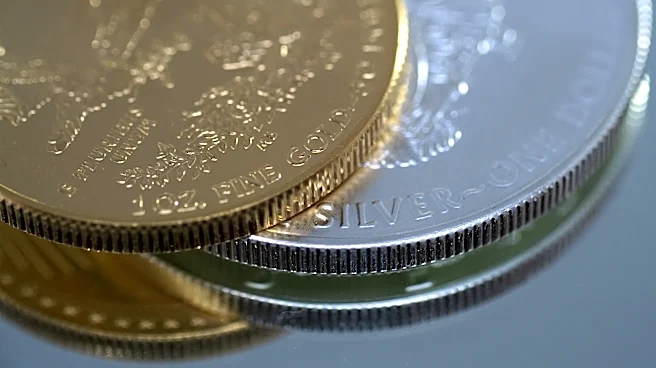
thereafter. This tradition of gold coinage continued until 1933, when President Franklin D. Roosevelt's Executive Order 6102 ended the private ownership of non-numismatic gold in the U.S., halting the Mint's production and issuance of gold coins to the public. This period led to the 1933 Saint-Gaudens $20 Double Eagle becoming a significant legend in American numismatics. Private ownership of gold was re-established in 1974 when President Gerald R. Ford signed a bill into law. Following this, the U.S. introduced its own American Gold Eagle coin in 1986 and continues to produce various gold coins for bullion, commemorative purposes, and collectors.
Why It's Important?
The historical trajectory of U.S. gold coinage reflects significant shifts in national economic policy and public access to precious metals. The 1792 Coinage Act's authorization of gold coins underscored the metal's role as a foundational element of the nation's currency. President Roosevelt's 1933 executive order, while controversial, was a drastic measure taken during the Great Depression, aimed at stabilizing the economy by increasing the government's gold reserves. This move had a profound impact on the numismatic market, creating rare and highly sought-after coins like the 1933 Saint-Gaudens Double Eagle. The subsequent re-legalization of private gold ownership in 1974, under President Ford, marked a return to a more open market for precious metals, allowing Americans to participate in the global gold bullion market. The continued production of American Gold Eagle coins and other gold items by the U.S. Mint serves both investment and collector markets, contributing to the nation's economic and cultural heritage.
What's Next?
The U.S. Mint is expected to continue its production of gold bullion coins, commemorative issues, and special collector's items, maintaining its role in the global gold market. The ongoing demand for gold as an investment and a collectible ensures the Mint's sustained activity in this area. Future releases will likely cater to both numismatists and investors, with new designs and series potentially introduced to maintain interest and market relevance. The Mint's programs are self-sustaining, operating without taxpayer funds, which supports their long-term viability. The focus will remain on producing high-quality gold products that reflect American history and culture, while also serving as a store of value.
Beyond the Headlines
The history of U.S. gold coinage extends beyond mere economic policy; it reflects deeper societal values and perceptions of wealth. The shift from gold-backed currency to fiat money, and the government's control over gold ownership, highlight the evolving relationship between citizens and their financial systems. The allure of gold coins, particularly rare ones like the 1933 Saint-Gaudens Double Eagle, speaks to the human fascination with tangible assets and historical artifacts. These coins are not just monetary instruments but also cultural touchstones, embodying periods of economic upheaval, recovery, and national identity. The Mint's continued production of gold coins, even in an era of digital finance, underscores the enduring appeal and symbolic importance of gold in the American consciousness, serving as a link to its foundational economic principles.