







What's Happening?
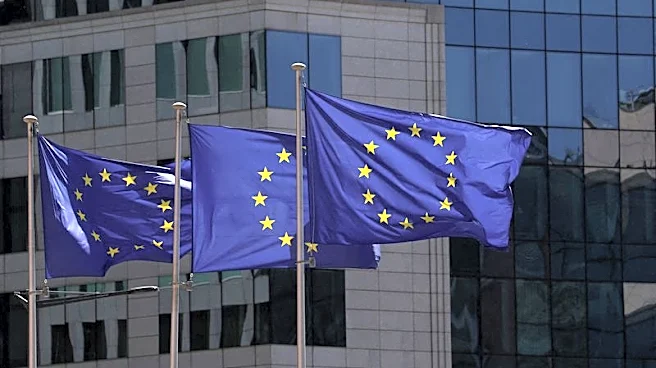
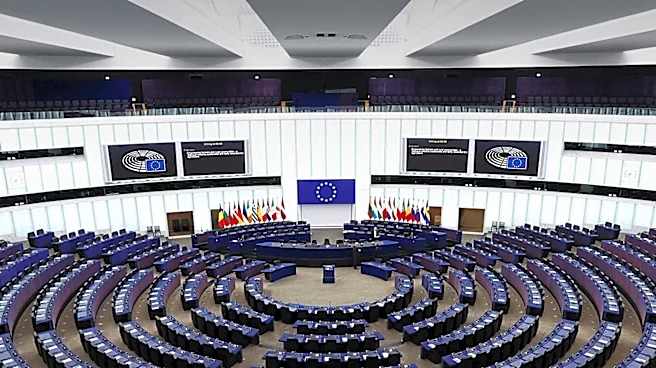
European Union lawmakers have called on the European Commission to compel Meta to implement the same robust safety protections for young users in Europe that the tech giant has agreed to roll out in parts of the United States. A letter, co-signed by 51
members of the European Parliament and addressed to European Commission President Ursula von der Leyen, argues that 'European children are worth no less than American ones' and that it would be 'untenable for European minors to end up less well protected.' The lawmakers are pushing for the Commission to conclude its probe into Meta with a formal non-compliance decision and accompanying penalties. They also suggested a more drastic measure: temporarily blocking access to Meta's platforms if the company continues to breach EU rules after other measures have failed, emphasizing that this is not censorship but about restoring credibility to enforcement.
Why It's Important?
This demand highlights a growing international push for greater accountability from tech giants regarding user safety, particularly for minors. The U.S. settlement, which includes a significant financial penalty and sweeping new limits on how teenagers use Facebook and Instagram, sets a precedent that EU lawmakers are keen to replicate. For U.S. tech companies like Meta, this signifies the increasing complexity of operating globally, as different jurisdictions impose varying, and often stricter, regulatory requirements. The potential for a temporary block on Meta's platforms in Europe represents a severe threat to its business model and market presence, underscoring the EU's determination to enforce its Digital Services Act (DSA). This could lead to a global standard-setting effect, where concessions made in one major market influence expectations and regulations in others, impacting how tech companies design and operate their services worldwide.
What's Next?
The European Commission is expected to continue its investigation into Meta under the Digital Services Act. Commission spokesman Thomas Regnier indicated that Brussels remains committed to securing changes from Meta, focusing on core design features of the platforms rather than just 'one or two inbuilt safeguards.' The lawmakers' letter urges the Commission to act 'without further delay' and issue a formal non-compliance decision. If the Commission accepts commitments from Meta, these commitments are expected to be at least as stringent as those agreed upon in the U.S. settlement. The threat of temporarily blocking access to Meta's platforms, while a drastic measure, indicates the potential for escalating enforcement actions if Meta does not comply. Separately, the EU is anticipated to announce further restrictions on social media use by children later this month, signaling a broader regulatory push in this area.
Beyond the Headlines
The debate over teen safety on social media platforms touches upon fundamental ethical and societal concerns regarding the impact of digital technologies on youth mental health and well-being. The EU lawmakers' assertion that 'European children are worth no less than American ones' reflects a universal concern for child protection in the digital age. This situation also highlights the evolving power dynamics between sovereign regulatory bodies and global tech corporations. The EU's aggressive stance, particularly through the DSA, aims to establish a framework where tech companies are held accountable for the societal impact of their products, rather than merely facing fines that can be 'written off.' The potential for a platform shutdown, even temporarily, could fundamentally alter how tech companies approach product development and user safety, prioritizing ethical design and robust protections to avoid severe regulatory penalties and maintain market access.