


What's Happening?
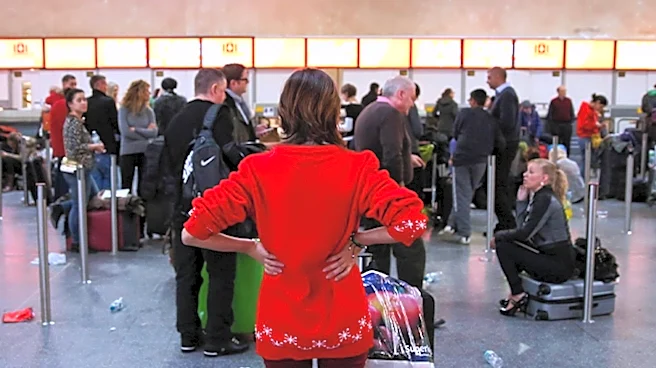
More than 100 travelers faced an 80-minute wait to enter Delta’s Sky Club at LaGuardia Airport’s Terminal C. This incident occurred despite the lounge’s substantial size, boasting 35,000 square feet and a 700-seat capacity. The queue extended past the lounge entrance,
reaching the terminal’s interfaith chapel, indicating severe congestion during peak hours on a Wednesday. Even premium cardholders, who pay significant annual fees for lounge access, found their entry blocked due to the overwhelming demand. This situation highlights an operational strain within premium airport services, as the lounge reached its saturation point, making it difficult for eligible travelers to access the promised amenities. Delta has previously implemented measures, such as restricting credit card access and requiring higher spending thresholds, to manage overcrowding, but these efforts appear insufficient during peak demand periods.
Why It's Important?
This overcrowding incident at a major U.S. airport lounge has significant implications for the perceived value of premium travel services and credit card benefits. Travelers who pay high annual fees for credit cards that offer lounge access expect a certain level of service and convenience. When they encounter long waits or are denied entry, it undermines the value proposition of these premium cards. This could lead consumers to re-evaluate whether the benefits justify the substantial costs, potentially impacting the loyalty programs and revenue streams of airlines and credit card companies. The incident also points to a broader challenge in the rapidly growing airport lounge market, which is projected to expand significantly in the coming years. Maintaining service quality amidst increasing demand will be crucial for providers to retain customer satisfaction and loyalty.
What's Next?
Delta may need to reassess its strategies for managing lounge capacity and demand, especially during peak travel times. Potential next steps could include adjusting staffing levels, refining entry protocols, or implementing more dynamic capacity limits to prevent future overcrowding. The airline might also consider further restrictions on credit card access or introducing a reservation system for lounge entry to better manage the flow of passengers. For premium cardholders, this event could prompt a re-evaluation of their card benefits and potentially lead to increased scrutiny of the terms and conditions associated with lounge access. Other airlines and lounge operators will likely observe this situation closely as they navigate the growing demand for premium airport amenities.
Beyond the Headlines
The incident at LaGuardia’s Delta Sky Club reflects a broader trend in the travel industry where premium services are experiencing unprecedented demand, sometimes outstripping available infrastructure. This raises questions about the sustainability of current business models for airport lounges, which often rely on partnerships with credit card companies to drive revenue. The perceived exclusivity and comfort of airport lounges are key selling points for premium credit cards, and consistent overcrowding could erode this appeal. Furthermore, it highlights a potential disconnect between the marketing of premium travel experiences and the reality of operational limitations, especially in busy travel hubs. This could lead to a re-evaluation of what constitutes a 'premium' travel experience in an increasingly crowded travel landscape.