






What's Happening?
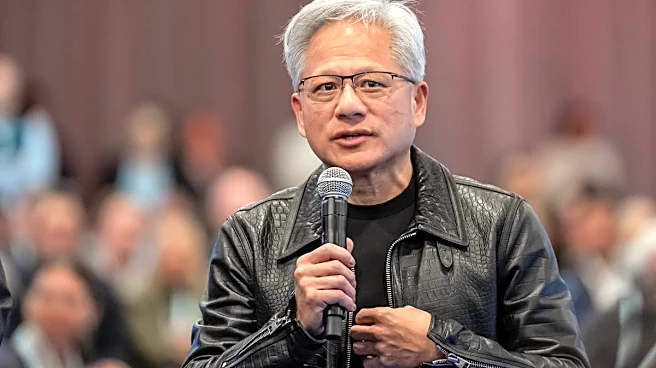
Jensen Huang, CEO of Nvidia, has advised young people to prioritize formal education and learn to utilize artificial intelligence (AI) as a tool to enhance their capabilities. During an interview with CNN, Huang emphasized that abandoning school due to fears
of AI-driven job automation is a disservice to society. He believes that education fosters a deeper understanding of the world, helps in revising biases, and enables more informed decision-making. Huang also stressed that AI should be embraced to expand individual potential rather than replace personal effort. He rejected the notion that AI will render individual endeavors irrelevant, calling such predictions discouraging for future generations. His advice comes as educational institutions and governments worldwide are grappling with how to integrate generative AI into learning and work environments, with organizations like the OECD highlighting both the benefits of personalized tutoring and the risks of over-reliance on automated responses.
Why It's Important?
Huang's stance is significant as it addresses a growing concern among students, parents, and educators about the future of work and education in an AI-dominated landscape. His emphasis on continuous learning and AI literacy underscores a critical shift in skill requirements for the U.S. workforce. By advocating for AI as an augmentation tool rather than a replacement for human effort, Huang provides a framework for how individuals and institutions can adapt to technological advancements. This perspective can influence educational policies and curriculum development, encouraging the integration of AI training and critical thinking skills. The debate over AI's impact on jobs, with the IMF estimating that 40% of global jobs are exposed to AI-related transformations, highlights the urgency of preparing the next generation. Huang's advice aims to mitigate anxieties and guide individuals toward leveraging AI for greater ambition and productivity, rather than succumbing to fears of obsolescence.
What's Next?
The ongoing discussion about AI's role in education and the workforce is likely to intensify, with leaders like Huang continuing to shape public perception and policy. Educational institutions may increasingly focus on developing curricula that teach students how to effectively use AI tools, critically evaluate AI-generated information, and understand its limitations. There could be a greater emphasis on interdisciplinary studies that combine traditional academic knowledge with AI proficiency. Businesses, particularly in the tech sector, might invest more in training programs that upskill their workforce in AI applications, aligning with Huang's vision of AI as an enhancer of human capabilities. Furthermore, policymakers may explore regulations and initiatives to ensure equitable access to AI education and tools, aiming to prevent widening skill gaps and economic disparities in the U.S. labor market.
Beyond the Headlines
Beyond the immediate implications for education and employment, Huang's message touches upon deeper societal and ethical considerations. His call to maintain formal education, even in an AI era, implicitly champions the enduring value of human intellect, critical thinking, and the ability to discern truth from AI-generated content. The warning against excessive reliance on automated responses, as echoed by the OECD, highlights the importance of human judgment and ethical reasoning, which AI currently lacks. This perspective challenges the narrative of AI as an all-encompassing solution, instead positioning it as a powerful, yet fallible, instrument that requires human oversight and critical engagement. The long-term shift could involve a redefinition of intelligence and skill, where the ability to collaborate with AI, rather than compete against it, becomes paramount, fostering a symbiotic relationship between humans and advanced technology.