








What's Happening?
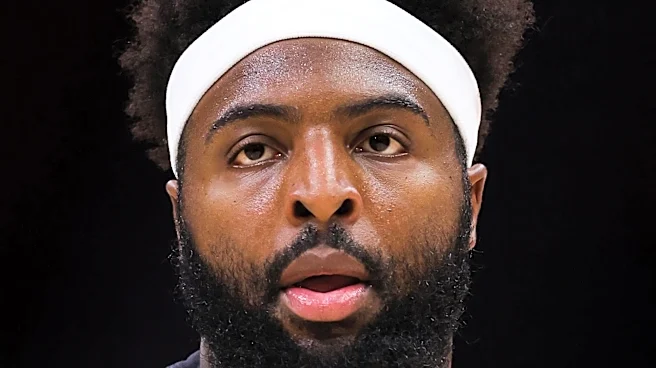
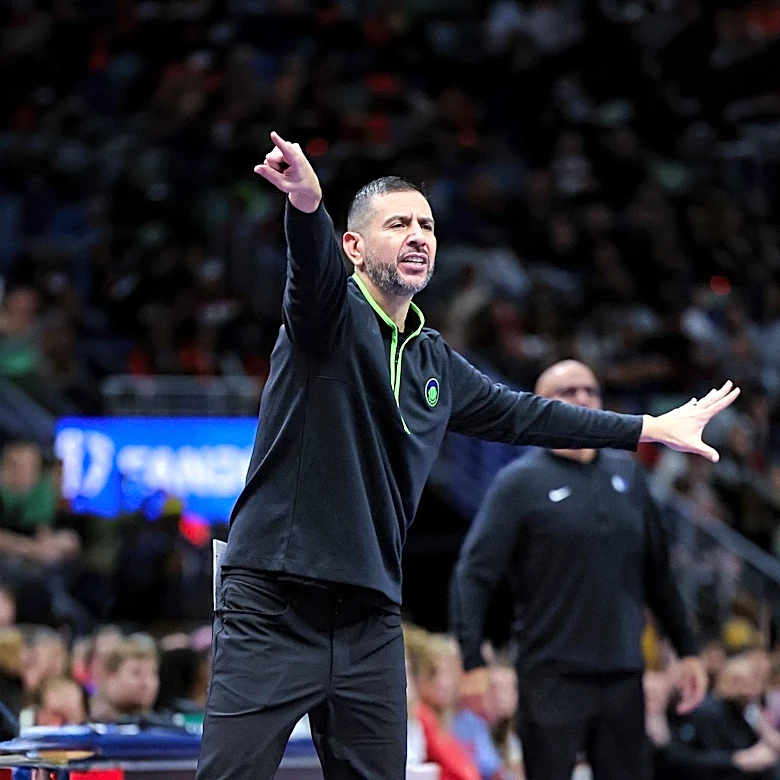
Boston Celtics head coach Joe Mazzulla is urging patience with center Mitchell Robinson, who has experienced a sluggish start to the season after joining the team from the New York Knicks. Robinson, who arrived with high expectations, is currently averaging
5.7 points and 5.3 rebounds per game, which would mark his lowest rebounding numbers in his nine-year career. Mazzulla acknowledges that Robinson is adjusting to a new role and increased responsibilities within the Celtics' system, which demands more movement and involvement in offensive actions compared to his previous team. The coach emphasized that such a transition requires not only tactical adjustments but also significant mental and psychological adaptation. Despite the initial struggles, Mazzulla remains confident in Robinson's process and potential, noting that his recent performance against the Bucks, where he grabbed 10 rebounds in 20 minutes, showed a glimpse of his expected impact.
Why It's Important?
The patience shown by Joe Mazzulla towards Mitchell Robinson is crucial for the Boston Celtics, as it underscores the team's commitment to player development and integration, especially for a veteran adjusting to a new system. High-profile acquisitions often face immense pressure to perform immediately, and a coach's support can be vital in navigating this period. Robinson's role as a starting center is critical for the Celtics' defensive and rebounding schemes, and his successful acclimation is essential for the team's overall performance. A lack of patience could lead to decreased confidence and hinder his ability to contribute effectively. By emphasizing the mental and psychological aspects of his transition, Mazzulla is fostering an environment where Robinson can gradually adapt and eventually fulfill the high expectations placed upon him, which is paramount for the Celtics' championship aspirations.
What's Next?
Mitchell Robinson will continue to work on his integration into the Boston Celtics' system, with Coach Mazzulla's continued support. The team has 74 regular-season games remaining, providing ample opportunity for Robinson to improve his performance and adjust to his new role. Mazzulla's comments suggest that the coaching staff will focus on empowering Robinson and helping him make the necessary mental and tactical adjustments. His recent 10-rebound performance against the Bucks, despite a low scoring output, indicates progress in his rebounding prowess. The Celtics will look for Robinson to consistently contribute in key areas, particularly rebounding and defense, as the season progresses and the team aims to solidify its position as a top contender in the Eastern Conference.
Beyond the Headlines
This situation with Mitchell Robinson highlights the complex challenges faced by professional athletes when transitioning to new teams and roles, even for seasoned veterans. It underscores that success isn't solely about talent but also about adaptability, mental resilience, and the support system provided by the coaching staff. The 'results-based' nature of professional sports often overlooks the psychological toll of such transitions. Mazzulla's approach, focusing on process over immediate outcomes, offers a valuable lesson in leadership and athlete management. It suggests that investing in a player's long-term adjustment, rather than demanding instant gratification, can ultimately yield greater returns for both the individual and the team. This perspective could influence how other organizations manage player transitions, emphasizing a more holistic and patient approach to integration.