






What's Happening?
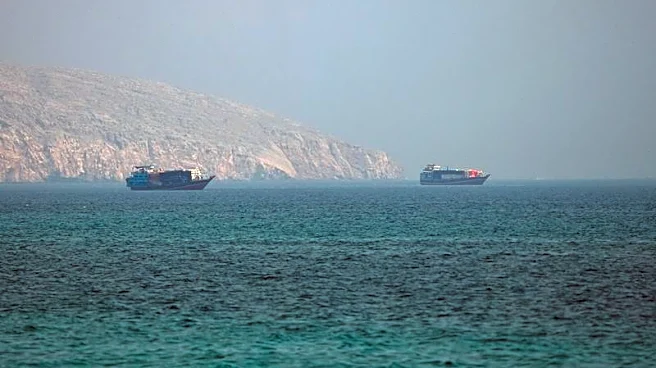
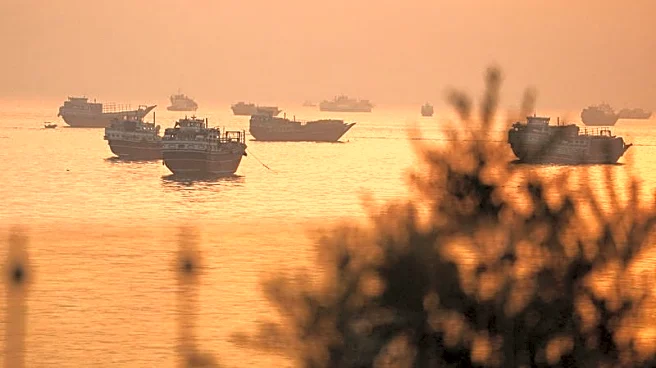
Lloyd's of London, a key player in the global insurance industry, is adapting its insurance policies in response to heightened geopolitical tensions in the Strait of Hormuz. Following strikes by the United States and Israel, Tehran's blockade of the strait
has led to a significant increase in war insurance premiums for ships transiting the area. Insurance underwriters are now pricing policies just six hours before a voyage, a reduction from the usual 24-48 hours, and these policies are valid for only three to seven days. This rapid adjustment reflects the volatile risk environment, with premiums soaring to as high as 10% of a vessel's value immediately after the strikes. Although rates have since decreased to 1-3%, the situation remains precarious, with ongoing threats of attacks and mines in the waterway.
Why It's Important?
The adjustments in insurance policies by Lloyd's of London highlight the broader economic and strategic implications of the conflict in the Strait of Hormuz, a critical chokepoint for global oil shipments. The increased insurance costs could lead to higher shipping expenses, impacting global oil prices and supply chains. For U.S. stakeholders, this situation underscores the vulnerability of international trade routes to geopolitical tensions. The insurance industry's response also illustrates the dynamic nature of risk assessment in conflict zones, affecting ship owners' decisions and potentially leading to disruptions in maritime commerce. The situation poses challenges for insurers, who must balance risk management with the need to provide coverage in a high-stakes environment.
What's Next?
As the conflict in the Strait of Hormuz continues, insurance premiums are unlikely to return to pre-conflict levels in the near term. Ship owners may face increased operational costs, and some vessels could become 'total losses' if they remain stranded. The insurance industry will closely monitor geopolitical developments, with potential adjustments in coverage terms and conditions. Additionally, the enforcement of sanctions and maritime laws could further complicate insurance arrangements, particularly if tolls are imposed by sanctioned entities. The situation requires ongoing vigilance from insurers, ship owners, and international stakeholders to navigate the evolving risk landscape.
Beyond the Headlines
The situation in the Strait of Hormuz also raises ethical and legal questions about the responsibilities of insurers and ship owners in conflict zones. The potential for significant financial losses and the human cost of maritime conflicts highlight the need for robust risk management strategies. The historical context of Lloyd's of London, with its long-standing tradition of insuring maritime ventures, adds a layer of complexity to the current crisis. The industry's ability to adapt to modern challenges while maintaining its historical roots is a testament to its resilience and strategic importance in global trade.