






What's Happening?
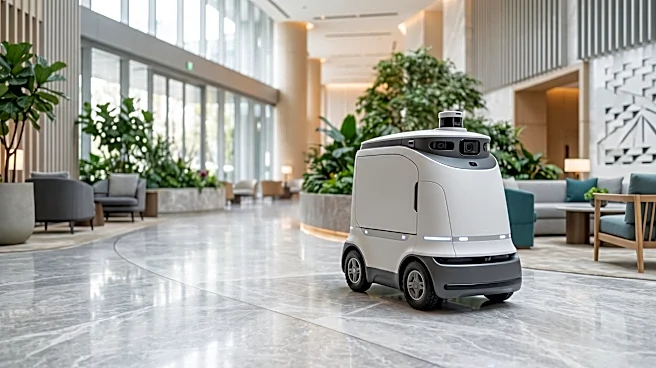
Bear Robotics is identified as a major player in the Asia Pacific Indoor Delivery Robots Market, which is projected for substantial growth. The market, encompassing autonomous robotic systems for indoor material transport in various sectors like hospitality,
healthcare, and retail, is expected to grow at a Compound Annual Growth Rate (CAGR) of 23.4% between 2025 and 2033. This growth is driven by increasing automation demands, rising labor costs, and advancements in AI-powered navigation technologies. China currently represents the largest market, while India is emerging as the fastest-growing region. Bear Robotics is listed alongside other prominent companies such as Pudu Robotics, Keenon Robotics, and Savioke, all contributing to the development and deployment of autonomous mobile robots (AMRs), service delivery robots, and intelligent indoor logistics platforms. These systems integrate advanced technologies like AI, machine learning, LiDAR sensors, and SLAM for efficient and autonomous operations.
Why It's Important?
The significant growth of the indoor delivery robots market in the Asia Pacific region indicates a broader global trend towards automation and efficiency in various industries. For U.S. companies like Bear Robotics, being a key player in this expanding market signifies potential for international growth and influence in the robotics sector. The adoption of these robots addresses critical operational challenges such as labor shortages and the need for contactless services, particularly in hospitality and healthcare. This trend also highlights the increasing reliance on AI and advanced sensor technologies to enhance operational capabilities and reliability of autonomous systems. The market's expansion creates opportunities for technological innovation, strategic partnerships, and the development of new business models, such as robotics-as-a-service, which could influence global market strategies for robotics manufacturers and technology providers.
What's Next?
The Asia Pacific Indoor Delivery Robots Market is expected to see continued innovation in AI-powered navigation, sensor integration, and intelligent fleet management. Future developments will likely focus on improving robot designs for complex indoor environments, enhancing battery performance, and enabling multi-robot coordination. Strategic partnerships between robotics manufacturers, hospitality groups, healthcare networks, and facility management companies are anticipated to accelerate commercialization across the region. Furthermore, the market will likely address challenges related to high initial investment costs, integration with existing infrastructure, cybersecurity vulnerabilities, and the need for continuous software updates. The growth in emerging economies like India, Indonesia, and Vietnam will create demand for more affordable robotic platforms and flexible service models, shaping the future competitive landscape.
Beyond the Headlines
The rise of indoor delivery robots extends beyond mere operational efficiency, touching upon broader societal and economic implications. The increased automation could lead to shifts in labor markets, requiring workforce retraining and adaptation to new roles that involve managing and maintaining robotic fleets. Ethical considerations regarding human-robot interaction, data privacy, and safety standards will become increasingly important as these robots become more ubiquitous in public and private spaces. The integration of these robots into smart buildings and urban infrastructure also signifies a step towards more interconnected and automated environments, potentially transforming urban logistics and service delivery models. This technological shift could also influence consumer expectations for speed and convenience in service delivery, pushing industries to further embrace automation to remain competitive.