




What's Happening?
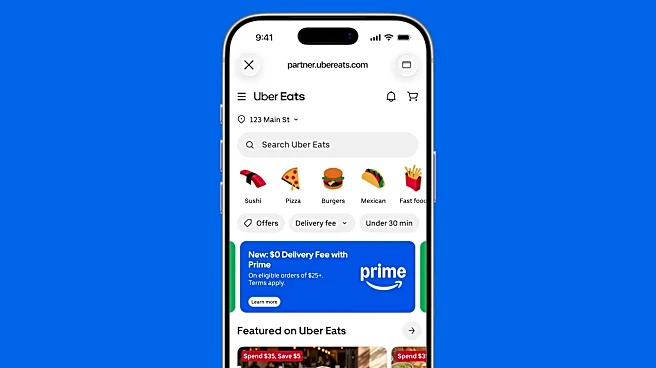
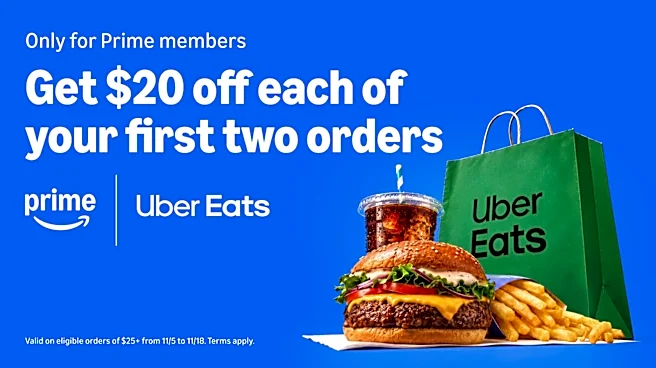
Amazon Prime members can now order food through Uber Eats without paying a delivery fee on orders of $25 or more, marking a new partnership between Amazon and Uber Eats. This new benefit also includes a $20 discount on members' first two orders of $25 or more.
To utilize this perk, Prime members must place their Uber Eats orders directly through Amazon, without needing a new app or Uber account. This development signifies the end of Amazon's previous partnership with Grubhub, which had offered similar benefits to Prime members since 2022. The shift is part of Amazon's ongoing strategy to enhance Prime membership value and adapt to the evolving delivery industry landscape.
Why It's Important?
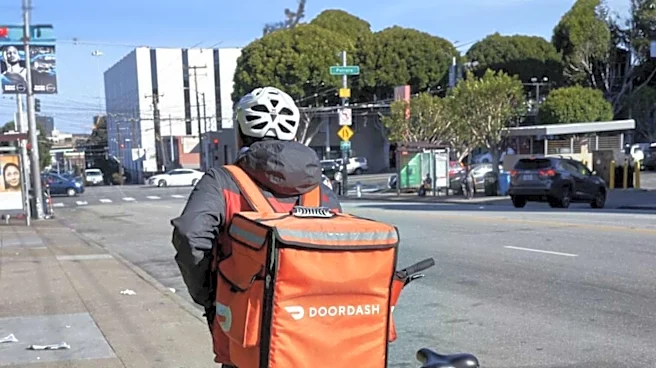
This new partnership between Amazon and Uber Eats has significant implications for the U.S. food delivery and e-commerce sectors. For Amazon Prime members, it adds another valuable perk, potentially increasing Prime subscriptions and customer loyalty by offering a popular service at a reduced cost. For Uber Eats, gaining access to Amazon's vast Prime subscriber base could lead to a substantial increase in order volume and market share, intensifying its competition with rivals like DoorDash. Conversely, Grubhub stands to lose a significant portion of its customer base that was tied to the Amazon Prime partnership, potentially impacting its revenue and market position. This move also highlights the dynamic nature of strategic alliances in the delivery industry, where companies constantly seek to optimize partnerships for competitive advantage and customer acquisition.
What's Next?
The termination of Amazon's partnership with Grubhub and the initiation of the Uber Eats collaboration will likely trigger a period of adjustment for all parties involved. Grubhub will need to develop new strategies to retain and attract customers, possibly through enhanced loyalty programs or unique offerings. Uber Eats will focus on seamlessly integrating its services for Prime members and capitalizing on the increased visibility and potential order volume. Amazon will monitor the success of this new perk, potentially using it as a model for future Prime benefits. The broader food delivery market may see increased consolidation or new strategic alliances as companies vie for market dominance. Consumers can expect continued innovation in delivery services, with platforms offering more bundled benefits and competitive pricing to attract and retain users.
Beyond the Headlines
This strategic shift by Amazon reflects a deeper trend in the U.S. digital economy: the convergence of e-commerce, subscription services, and on-demand delivery. Amazon's decision to switch partners underscores the immense power of its Prime membership program as a leverage point in negotiations and a critical asset for any company seeking to expand its reach. It also highlights the intense competition and high stakes within the food delivery industry, where profitability often hinges on scale and exclusive partnerships. The move could further entrench the dominance of a few major players, potentially making it harder for smaller delivery services to compete. Moreover, it raises questions about data sharing and customer privacy between these large tech entities, as well as the long-term impact on the gig economy workers who facilitate these deliveries, whose livelihoods are often tied to the fluctuating fortunes of these corporate alliances.