








What's Happening?
Many retailers are struggling to fully capitalize on their significant investments in digital capabilities, including AI-powered tools, omnichannel fulfillment, and retail-media networks. The primary obstacle is not a lack of technology or strategy, but
rather outdated organizational structures designed for a channel-based retail environment. Customers today engage in fluid, multi-channel shopping journeys, often discovering products on social media, researching with AI, checking inventory online, and purchasing through various methods like curbside pickup. However, internal retail teams often remain siloed, focusing on channel-specific metrics (e.g., store sales vs. digital revenue), which creates friction and inconsistent customer experiences. This disconnect hinders the effective integration of new technologies and prevents retailers from achieving seamless execution across different touchpoints, as highlighted by the challenges in coordinating merchandising, marketing, and operations.
Why It's Important?
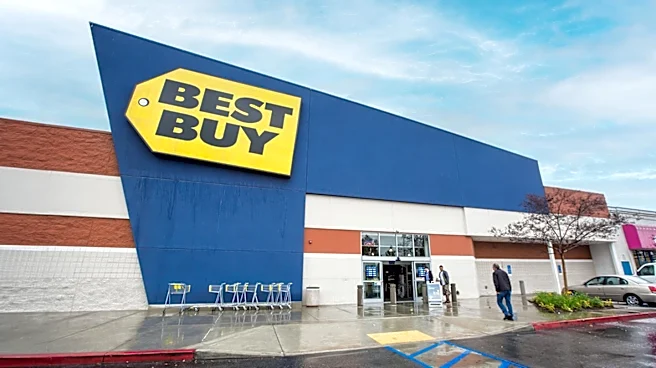
This organizational mismatch is critical because it directly impacts a retailer's ability to compete and grow in the evolving market. As AI influences product discovery, retail-media networks reshape promotional strategies, and omnichannel fulfillment blends physical and digital inventory, tighter coordination across teams is essential. Retailers that fail to adapt their structures risk slow digital initiative execution, inconsistent customer experiences, and missed opportunities for competitive advantage. The inability to translate technological potential into measurable operational results means that substantial investments in AI and other digital tools may not yield their full benefits. This issue affects major U.S. retailers, as seen in examples like Walmart, Target, and Best Buy, who are actively working to integrate their store and digital operations to enable capabilities like 'buy online, pick up in store' and real-time inventory visibility.
What's Next?
Leading retailers are beginning to restructure their organizations to align with customer journeys and shared outcomes, rather than traditional channel ownership. This involves establishing cross-functional teams focused on stages like discovery, conversion, fulfillment, and loyalty. They are also creating shared Key Performance Indicators (KPIs) across store and digital channels, integrating inventory visibility, and aligning planning cycles for merchandising, marketing, and supply chain. Furthermore, retailers are adopting hybrid approaches for technology implementation, building core capabilities internally while partnering with specialized providers for rapidly evolving areas like AI and personalization platforms. The next phase of retail transformation will require continuous reassessment of which functions to build internally versus outsource, and a shift in leadership focus to organizational adaptability and fostering a culture that embraces experimentation and learning from mistakes.
Beyond the Headlines
The underlying challenge extends beyond mere technological adoption to a fundamental shift in organizational philosophy. The emphasis is moving from simply acquiring advanced tools to cultivating an environment where insights generated by AI are trusted, acted upon by teams, and integrated into daily decision-making. This requires leaders to be willing to experiment, empower teams to learn, and create operating cultures that can translate new insights into action. The historical example of Walmart's in-store media network demonstrates that even with advanced technology and significant reach, a lack of internal alignment and a clear monetization strategy can lead to failure. The success of future retail transformations will hinge on leadership's ability to bridge the 'AI implementation gap' by fostering organizational adaptability and ensuring that people, not just technology, drive change.