







What's Happening?
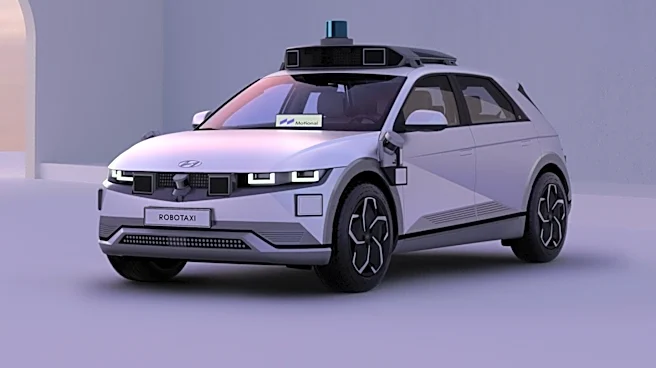
Waymo, an Alphabet company, has launched its next-generation robotaxi, named 'Ojai,' for all riders in Los Angeles, Phoenix, and San Francisco. This expansion marks a significant step in Waymo's strategy to deploy a more cost-effective and efficient fleet.
Currently, customers in these cities may be assigned an Ojai when hailing a ride, with plans to allow riders to choose between the Ojai and the older Jaguar I-Pace robotaxi once more Ojai vehicles are integrated into the fleet. Waymo presently operates approximately 300 Ojai robotaxis commercially and intends to introduce the Ojai in Denver, Las Vegas, and San Diego later this year. The Ojai is built on Zeekr's SEA-M platform, designed for vehicles like robotaxis and delivery vans, and is equipped with Waymo’s sixth-generation self-driving system and Google’s Gemini AI for in-car assistance. The base Zeekr vehicles are imported without Chinese connected-car technology and are subsequently outfitted with Waymo's self-driving system at its Arizona factory.
Why It's Important?
The introduction of Waymo's Ojai robotaxi is crucial for the company's long-term goals of achieving mass scale and profitability in the autonomous vehicle market. The Ojai is designed to be cheaper to build, operate, and maintain compared to the previous Jaguar I-Pace models, which were considered a temporary solution. This cost efficiency is vital for Waymo to expand its services more broadly across the U.S. and compete effectively in the burgeoning robotaxi industry. The integration of Google's Gemini AI also enhances the user experience, potentially increasing rider adoption and satisfaction. However, the reliance on imported vehicles from China's Geely Holding Group, specifically Zeekr, means that Waymo faces significant import tariffs, which increase the overall cost of each Ojai vehicle. This tariff burden could impact Waymo's profitability margins and the speed of its expansion, despite the Ojai's inherent cost-saving design. The success of the Ojai in these initial markets will be a key indicator of Waymo's ability to scale its operations and achieve its commercial ambitions.
What's Next?
Waymo plans to further roll out the Ojai robotaxi in Denver, Las Vegas, and San Diego later this year, indicating a continued aggressive expansion strategy. As more Ojai vehicles are added to the fleet, riders in the operational cities will eventually have the option to choose between the new Ojai and the older Jaguar I-Pace models. Research firm MoffettNathanson projects that Waymo is on track to import 5,000 Ojai vehicles into the United States by the end of 2026, which would more than double its current Jaguar fleet. This significant increase in vehicle numbers suggests a rapid scaling of Waymo's services and a deeper penetration into the U.S. market. The company will likely continue to monitor the performance and cost-effectiveness of the Ojai, especially in light of the import tariffs, to refine its deployment strategy and potentially explore options for mitigating these costs in the future. The ongoing integration of advanced AI systems like Gemini will also likely see further enhancements and features for riders.
Beyond the Headlines
The deployment of the Waymo Ojai robotaxi highlights several deeper implications for the autonomous vehicle industry and U.S. trade policy. The strategic partnership with Zeekr, a brand under China's Geely Holding Group, underscores the globalized nature of automotive manufacturing and the complex supply chains involved in advanced technology. While the Ojai is designed for cost-efficiency, the impact of U.S. tariffs on imported vehicles from China introduces a significant economic variable, potentially influencing future manufacturing decisions or trade negotiations. This situation also brings to light the ethical and regulatory considerations surrounding autonomous vehicles, particularly regarding data privacy with the use of AI assistants like Gemini, and the safety standards for self-driving systems. The modular design of Waymo's sixth-generation self-driving system, intended to work across various vehicle types, suggests a future where autonomous technology could be more widely integrated into different transportation solutions, potentially transforming urban mobility and logistics beyond just ride-hailing services.