









What's Happening?
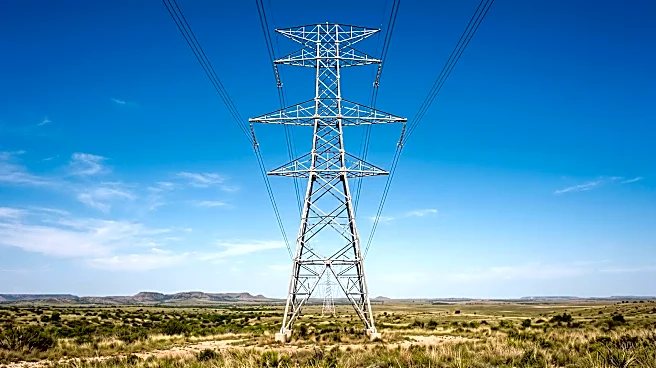
The Public Utility Commission of Texas (PUCT) has voted to extend the time to consider rehearing motions for the Howard to Solstice 765-kilovolt transmission line project. This project, a collaboration between AEP Texas and CPS Energy, is designed to span
approximately 370 miles across South and West Texas, connecting the San Antonio and Fort Stockton areas. It is a key component of the 765-kV Strategic Transmission Expansion Plan (STEP) Permian, which aims to establish three transmission lines totaling over 1,200 miles to transport power from East Texas to the Permian Basin. The PUCT initially approved the Howard to Solstice line on September 11. However, multiple parties, including the pro-landowner group American Stewards of Liberty, filed rehearing motions. American Stewards of Liberty argued that the PUCT incorrectly determined the necessity of the project as part of the Permian Basin Reliability Plan (PBRP). State law dictates that if commissioners do not act on rehearing motions within 55 days of an approval order, the motions are automatically denied, and the order becomes final, though they can extend this deadline up to 100 days.
Why It's Important?
This extension by the PUCT signifies a delay in a critical infrastructure project intended to bolster the energy grid in the natural gas-rich Permian Basin. The 765-kV transmission lines are designed to enhance reliability and facilitate power movement, which is crucial for supporting economic activities in the region. The opposition from landowner groups like American Stewards of Liberty highlights ongoing concerns regarding the environmental impact and property rights associated with large-scale transmission line construction. The legal and regulatory challenges, including questions about whether the PUCT is overstepping its legislative mandate under House Bill 5066, underscore the complexities of energy infrastructure development in Texas. The outcome of these rehearing motions will not only affect the timeline and feasibility of the Howard to Solstice line but could also set precedents for the other two proposed transmission lines within the STEP Permian initiative, impacting future energy projects and the balance between energy needs and local concerns.
What's Next?
The extension of the review period means that the Howard to Solstice transmission line project remains in a holding pattern. Attorney Connor Ellington noted that utilities cannot use eminent domain or begin construction until the order becomes final. If the PUCT does not rule on the rehearing motions within the extended 100-day period from the original approval order, the motions will be automatically denied, and the initial approval will become final. This would then allow landowners to pursue legal action in court. The ongoing scrutiny of the PUCT and the STEP Permian plan by landowners and lawmakers suggests that further legal and political challenges are likely, regardless of the immediate outcome of these motions. The situation also reflects broader discussions about the incentives for building new projects within Texas' regulated monopoly structure, where utility shareholders benefit from investments in new infrastructure.
Beyond the Headlines
The controversy surrounding the Howard to Solstice transmission line project extends beyond immediate regulatory decisions, touching upon fundamental issues of land use, environmental stewardship, and the balance of power between state regulatory bodies and local communities. The arguments raised by American Stewards of Liberty regarding the PUCT's interpretation of legislative mandates highlight a recurring tension in infrastructure development: the need for energy expansion versus the protection of individual and community interests. The project's delay, driven by these challenges, could also prompt a reevaluation of how large-scale energy projects are planned, approved, and communicated to affected populations. This situation may influence future policy-making regarding eminent domain, environmental impact assessments, and the transparency of regulatory processes for energy infrastructure across the state and potentially the nation.