


What's Happening?
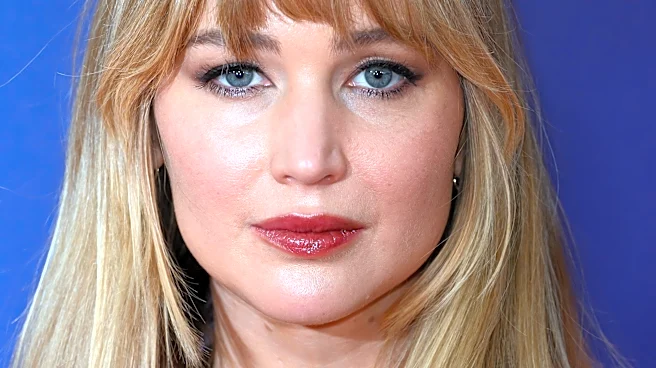
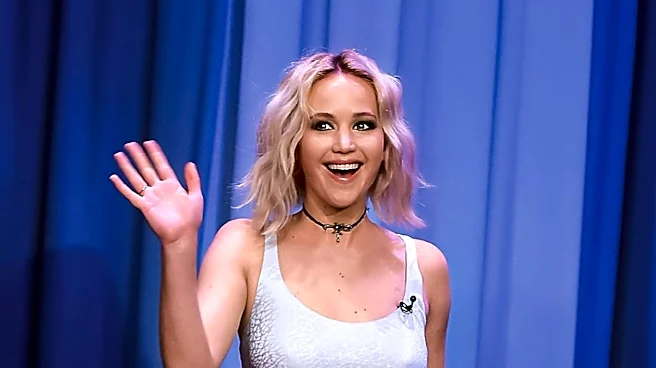
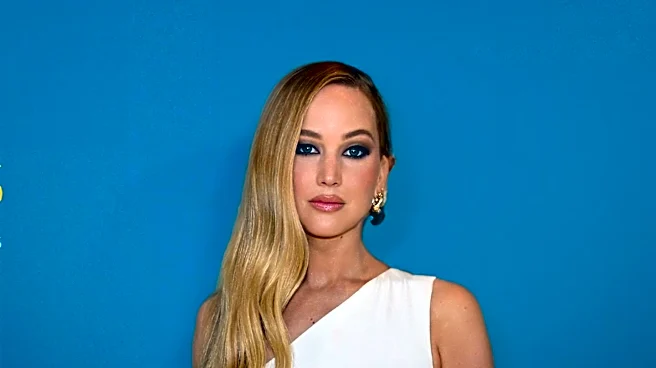
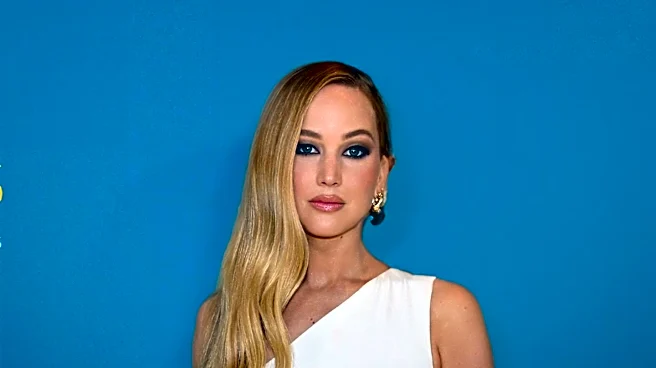
Actress Jennifer Lawrence recently discussed her past 'Hunger Games' pixie haircut, expressing genuine embarrassment over the style during an interview on Alex Cooper's 'Call Her Daddy' podcast. Lawrence revealed she asked her husband, Cooke Maroney,
not to search for photos of the haircut online. She explained that the drastic chop was a form of protest during the filming of 'The Hunger Games: Mockingjay Parts 1 & 2'. As a natural blonde, she had to dye her hair dark brunette for her role as Katniss Everdeen. Despite her requests, the production team refused to allow her to wear wigs, leading to severe hair damage from frequent dyeing. In response, Lawrence cut off her hair, resulting in the now-famous pixie cut. In other news, Jennifer Lawrence has also recently launched her own hair care brand, Mes°, in collaboration with Jasmina Aganovic, the founder and CEO of Arcaea.
Why It's Important?
This story offers a glimpse into the pressures and challenges faced by actors in the entertainment industry, particularly concerning their physical appearance and creative control. Lawrence's decision to cut her hair as a 'protest' highlights potential conflicts between an actor's personal well-being and production demands. The revelation of hair damage due to role requirements could spark discussions within the industry about better protective measures for actors' health and appearance. Furthermore, her venture into the hair care market with Mes° signifies a growing trend of celebrities leveraging their personal brand and experiences to launch entrepreneurial endeavors. This move could impact the beauty industry, introducing a new competitor backed by a high-profile name, and potentially influencing consumer trends in hair care.
What's Next?
The discussion around Jennifer Lawrence's past haircut and the reasons behind it may lead to increased public and industry scrutiny regarding actor welfare on film sets. This could prompt production companies to re-evaluate their policies on hair and makeup requirements, potentially offering more flexibility or protective measures for actors. Her new hair care brand, Mes°, will likely aim to establish its presence in the competitive beauty market. Future developments will include marketing campaigns, product launches, and consumer reception, which will determine the brand's success and its impact on the broader hair care industry. The brand's partnership with Jasmina Aganovic suggests a focus on scientific or innovative approaches to hair care, which could differentiate it from other celebrity-backed brands.
Beyond the Headlines
Jennifer Lawrence's candidness about her 'protest haircut' touches upon broader themes of agency and control within the entertainment industry. It underscores the often-unseen sacrifices actors make for their roles and the limited power they may feel in certain situations. This narrative contributes to ongoing conversations about labor practices and artist rights in Hollywood. Her entrepreneurial pivot into hair care also reflects a strategic evolution for celebrities, moving beyond traditional endorsements to direct ownership and brand building. This trend suggests a shift towards more diversified income streams and personal brand extension, potentially influencing how future celebrities manage their careers and public image. The ethical implications of demanding specific physical transformations from actors, especially when it impacts their health, remain a pertinent discussion point.